Kettle Nook
Buying guide

The Best Italian Espresso Machines

Seven Italian espresso machines, one per brand, from a stovetop moka pot to a hand lever, with what owners report after years of use.

By Nora Pell
Updated Nov 202621 compared, 7 picked

I earn a commission when you buy through my links, at no extra cost to you. How that works. Amazon prices as of Nov 29, 4:18 AM ET, subject to change. Details

Gaggia Classic Pro E24
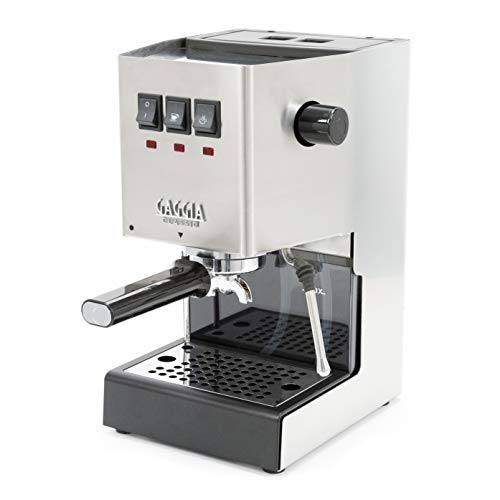
Top pickGaggia Classic Pro E24

Made in Italy · 58 mm portafilter · 3-way valve

Compare all 7 machines

An Italian espresso machine is built to last: brass inside, a portafilter you lock in by hand, and parts you can still buy decades later. The one I'd buy for most kitchens is the Gaggia Classic Pro, made in Italy with the same 58 mm portafilter cafés use, for about $450.

If you want the grinder built in, De'Longhi's Arte Evo grinds the beans and helps you tamp for about $450. If you'd rather make coffee the way most Italians do at home, put a Moka Express on the stove. And if you steam milk for two every morning, the Appartamento, handcrafted in Milan, brews and steams at the same time.

At a glance

Rank numbers jump to the full write-up.

1
Most home baristasGaggia Classic Pro E24Brand: Gaggia, since 1948Type: Semi-automaticMilk: Commercial steam wand
2
Beans to cup in one machineDe'Longhi La Specialista Arte EvoBrand: De'Longhi, since 1902Type: Semi-automatic with grinderMilk: Manual steam wand
3
No machine at allBialetti Moka ExpressBrand: BialettiType: Stovetop moka potMilk: None
4
A machine for lifeRancilio SilviaBrand: Rancilio, since 1927Type: Semi-automaticMilk: Commercial steam wand
5
A small, pretty counterSmeg ECF02Brand: SmegType: Semi-automaticMilk: Steam wand
6
Pulling shots by handLa Pavoni EuropiccolaBrand: La Pavoni, since 1905Type: Manual leverMilk: Steam wand
7
Lattes back to backRocket Appartamento 2.0Brand: Rocket, since 2007Type: Heat exchangerMilk: Commercial steam wand

Italian espresso machine brands, and what each one does best

  • Gaggia, launched by Achille Gaggia in 1948: the Classic Pro, the machine people learn real espresso on.
  • De'Longhi, in business since 1902 and the biggest name here: machines that do part of the work for you, like the Arte Evo with its grinder.
  • Bialetti: the Moka Express, sold since 1933 and still the stovetop pot most Italians make coffee in at home.
  • Rancilio, founded in 1927 in Parabiago, near Milan: café machines, and the Silvia, built from the same parts.
  • Smeg, best known for its retro fridges: small, colorful espresso makers in a 1950s style.
  • La Pavoni, founded in Milan in 1905 and one of the first espresso machine makers: hand-lever machines.
  • Rocket, founded in Milan in 2007: prosumer machines, the kind that sit between a home machine and a café's.

Which Italian espresso machines are made in Italy

An Italian name doesn't mean an Italian factory. Gaggia says the Classic Pro is designed and built entirely in Italy, Rancilio builds the Silvia there, Smeg says the ECF02 is designed and manufactured in Italy, La Pavoni sells its lever machines as made in Italy, Rocket handcrafts every machine in Milan, and Bialetti lists the Moka Express as made in Italy. De'Longhi is an Italian company, but its listing for the Arte Evo doesn't say where it's built.

The best Italian espresso machines, ranked

01
Most home baristas

Gaggia Classic Pro E24

Gaggia Classic Pro E24

Built in Italy around a steel frame and a solid brass group, with the 58 mm portafilter cafés use and a steam wand with real push.

Good for

You want a real Italian machine to learn espresso on, one you can open and fix, and you'll pair it with a good grinder.

Skip it if

You want the machine to stop the shot for you. Everything on the Classic Pro is a switch you flip yourself.

  • Made in Italy
  • 58 mm portafilter
  • 3-way valve
  • Brass group
Read the full write-up

The best Italian espresso machine for home

Gaggia has sold the Classic to home baristas for decades, and the E24 is the current version, designed and built in Italy. It's the cheapest Italian machine here with a full-size café portafilter, which matters more than it sounds: pro baskets and tampers made for café machines fit it, so the machine grows with you.

Pull a shot, flip the steam switch, and give the little brass boiler, just over 100 ml, up to a minute to build pressure. Then the wand comes out strong enough for proper latte milk. You run everything by feel and by the clock, since there's no gauge and no timer on the front.

Budget for an espresso grinder too. My pick is in the burr grinder guide.

What owners report

One owner needed around 500 g of beans to get a drinkable shot, after which almost every shot came out right. A daily user is three years in with a single gasket replaced.

The worries are rust, which two owners found on 2023 machines along with a corroded boiler, the short space under the spout, which keeps tall mugs out for two others, and a warm-up of about 10 minutes from cold for another.

Flaws but not dealbreakers

  • No pressure gauge and no shot timer.
  • A short gap under the spout: espresso cups and short glasses only.
  • The plastic tamper in the box is worth replacing early.
02
Beans to cup in one machine

De'Longhi La Specialista Arte Evo

De'Longhi La Specialista Arte Evo

A conical burr grinder, a collar that keeps the grounds in while you tamp and a strong steam wand, all on one machine for about $450.

Good for

You want fresh-ground espresso and latte milk from one machine under $500, and you'd like help with the messy steps.

Skip it if

Made in Italy matters to you. De'Longhi doesn't say where the Arte Evo is built.

  • Built-in burr grinder
  • Tamping collar
  • 3 brew temperatures
  • Cold brew in 5 minutes
Read the full write-up

Beans to espresso on one machine

The Arte Evo grinds straight into the portafilter from a conical burr grinder on top. A collar sits on the basket so the grounds stay put while you tamp, and the tamper and a milk jug come in the box, so the only thing left to buy is beans. It brews with a 15-bar pump that De'Longhi sets to 9 bars for the shot, at one of three temperatures, from a thermoblock that heats fast.

The steam wand is strong for the price: one reviewer found it powerful enough for latte art milk, dairy or oat, though it sits low over the drip tray on a stiff joint, so you tilt the jug to get the milk swirling. It doesn't purge itself after steaming, so give it a quick blast and a wipe. De'Longhi also built in a cold setting that makes a cold-brew-style coffee in under five minutes, developed with the Specialty Coffee Association.

What owners report

Reports on this version are few, so these are counts and not proportions. One owner has gone through several kilograms of coffee since September and a few descaling cycles, and likes it better than machines costing more than $2,000 that he owned before.

On the previous Arte, one owner's grinder stopped at three months: the plastic parts holding it had broken, and a small chute in front of the bean hopper had packed with grounds. The machine went back for two weeks. Another owner's machine stopped working at four months, and a third found the pressure drifting and the descaling light coming on far too often.

Flaws but not dealbreakers

  • If the built-in grinder fails, the whole machine goes in for repair.
  • The steam wand sits low and doesn't swing far.
  • Clean the chute in front of the hopper now and then: the manual doesn't mention it.
Size

About 14.4 x 11.2 x 15.9 inches and 29 lb, with a 55.8 oz tank.

03
No machine at all

Bialetti Moka Express

Bialetti Moka Express

The eight-sided aluminum pot Alfonso Bialetti invented in 1933, still sold as made in Italy, for strong coffee on any gas or electric stove.

Good for

You want Italian coffee the way most Italians make it at home, strong and small, with nothing to plug in.

Skip it if

You want true espresso with crema, or steamed milk. A moka pot can't build that pressure, and it has no wand.

  • Made in Italy
  • 6 espresso cups
  • Gas and electric
  • Induction with a plate
Read the full write-up

The original Italian espresso maker

Alfonso Bialetti invented the Moka Express in 1933, and it still has the eight-sided aluminum body and the little man with a moustache on the side. Fill the bottom with water up to the valve, fill the funnel with ground coffee without pressing it down, screw on the top and set it on the stove. When it starts to gurgle, turn off the heat: the coffee is ready.

What comes out is strong and bold, with more edge than espresso because the steam pushes the water through at far lower pressure. It's still the base of a good caffè latte with hot milk, and my moka pot vs AeroPress guide covers how it compares with the other cheap way to strong coffee. Sizes are counted in espresso cups: the 6-cup makes one big mug or two small coffees. Gas and electric stoves are fine; an induction hob needs Bialetti's adapter plate underneath.

Rinse it with water only. Bialetti warns that detergent and the dishwasher harm the pot and the flavor.

What owners report

One owner says it makes a really strong coffee and takes a little more practice than other coffee makers before you stop burning it. Another has Italian-made pots that have lasted 20 years without a new gasket.

On the other side, one owner's handle broke off at its bracket after about a month, another's pot started leaking while brewing after less than a year, and two found rust inside the water chamber. Two owners of newer Bialetti pots found "made in China" on the box, so if the origin matters, check the box when it arrives.

Flaws but not dealbreakers

  • Aluminum, so induction needs the separate plate.
  • Hand wash with water only.
  • The handle can break at its bracket.
04
A machine for life

Rancilio Silvia

Rancilio Silvia

Rancilio's café know-how in a home machine that has barely changed in more than 20 years, so parts and fixes are easy to find.

Good for

You want one simple machine for the next twenty years, with parts any espresso repair shop stocks.

Skip it if

You want a temperature readout. The Silvia has none, and you learn its rhythm instead.

  • Made in Italy
  • 12 oz brass boiler
  • Backflush-ready
  • Four colors
Read the full write-up

A machine you'll keep for decades

Rancilio's main business is café equipment, and you can see it in the Silvia's brass group and its 12 oz brass boiler, the one boiler that handles both shots and steam. A three-way valve means you can backflush the group with a blind basket, the cleaning routine baristas do at closing time.

One retailer that has sold it for 15 years says it has a bit of a learning curve that a PID, a digital temperature control, smooths out. The steam wand is strong, and the single boiler means you switch to steam after the shot and wait for it to build. It comes in four colors: stainless, black, white and sage green.

What owners report

Long-time owners are the Silvia's best argument: several report more than a decade of use, some two, and figure it will see them out, helped by spare parts priced like café spares. Several add that a cheap grinder wastes it.

On the minus side, one owner calls it loud and wishes it had a gauge and a PID, and another had the feet come unstuck.

Flaws but not dealbreakers

  • No PID or pressure gauge on the standard model.
  • One boiler, so lattes for a crowd are slow.
  • Noisy pump.
05
A small, pretty counter

Smeg ECF02

Smeg ECF02

A 1950s-style espresso maker made in Italy, 6 inches wide, with a steam wand for cappuccino and a filter for paper pods.

Good for

You want a small espresso and cappuccino maker that looks like it came out of a 1955 kitchen, and you make one or two drinks at a time.

Skip it if

You make milk drinks for two or more, back to back. After steaming, the wand needs a purge before the next shot.

  • Made in Italy
  • 6 inches wide
  • Takes E.S.E. pods
  • Hot water wand
Read the full write-up

Retro looks, real espresso and a pod option

The ECF02 is Smeg's espresso machine, made in Italy in the same 1950s style as its fridges, and only 6 inches wide. A 15-bar pump and a thermoblock heat the water fast, with three brew temperatures and buttons for one or two cups. The 51 mm portafilter takes ground coffee or E.S.E. paper pods with the filter in the box, and the steam wand doubles as a hot-water tap for an americano or tea.

One reviewer got shots with a thick crema and a sweet kick, though less nuanced than it could be, and found the milk bubbly rather than silky. The bigger nuisance was the wand: after each milk drink it needed about 40 seconds of purging, around 3.5 oz (100 ml) of hot water into a cup, before the machine would brew again, so drinks for two or more took at least ten minutes. Descaling took about 45 minutes. It cleans up easily, with a drip tray and tank that fit in a sink.

What owners report

Reports on this machine are few. One owner who uses it several times a week says it does a decent job for a home machine and praises Smeg's customer service.

Flaws but not dealbreakers

  • The purge after steaming slows down a second drink.
  • Milk comes out frothy rather than silky.
  • The 51 mm portafilter is a smaller size than café baskets.
Size

About 6 inches wide, 13 inches deep and 13 inches tall, with a removable tank.

06
Pulling shots by hand

La Pavoni Europiccola

La Pavoni Europiccola

No pump at all, just a lever and a piston, so you decide how long the coffee soaks and how hard the water goes through it.

Good for

You want to pull espresso by hand, with a lever, and you enjoy getting a little better at it every week.

Skip it if

You make several drinks in a row. The group gets hotter with each shot, and the coffee turns bitter.

  • Hand lever
  • 0.8 L boiler
  • Up to 8 cups a fill
  • Chrome finish
Read the full write-up

The Italian manual espresso maker

La Pavoni has made espresso machines in Milan since 1905, and the Europiccola is the lever machine it sells for home kitchens. There's no pump. Lift the lever and a piston rises, letting hot water flow onto the coffee, and you decide how long it soaks. Push the lever down and you press the water through the puck yourself. Pull fast or slow, hard or soft, and the shot changes with it.

The chrome boiler holds 0.8 L, enough for up to eight 2 oz espressos per fill, with a sight glass on the side so you see the water level. The same boiler feeds the steam wand, and owners say it's powerful. It takes a very good grinder and some patience: this is the machine for the person who wants espresso to be a hobby.

What owners report

One owner who had worked a year as a barista chose it over a Rancilio Silvia, despite everything he'd read about the learning curve. Another took two months to learn to froth milk on it, says the steam is strong, and soaks the removable wand overnight to keep it clean.

Several owners on a lever forum say the group head heats up shot after shot. After a couple, they let it cool, or cool the group with a wet towel, before pulling another. One long-time owner advises unplugging it when you're done, because left on for hours it can melt a plastic part inside.

Flaws but not dealbreakers

  • Overheats after a few shots in a row.
  • Needs a grinder that goes very fine, and a steady hand.
  • Turn it off after use: it isn't made to sit on all day.
Size

About 12 inches tall and 14 lb, with a 0.8 L boiler.

07
Lattes back to back

Rocket Appartamento 2.0

Rocket Appartamento 2.0

Handcrafted in Milan around a 1.8-liter heat exchanger boiler, so you steam milk while the shot is still running.

Good for

You make milk drinks every morning, often two at a time, and you want a machine handcrafted in Milan that you'll keep for years.

Skip it if

You drink from tall mugs. There's only about 3.5 inches (8.9 cm) under the spout.

  • Handcrafted in Milan
  • 1.8 L boiler
  • Brew and steam at once
  • 2.5 L tank
Read the full write-up

Espresso and steamed milk at the same time

The Appartamento is Rocket's compact machine, built by hand in Milan. Its 1.8-liter boiler is kept at steaming temperature, and a tube running through it heats the brewing water on the way to the group, which is why you can steam milk while the shot is still pouring. Water from the boiler keeps the heavy group head hot, so shots come out at a steady temperature.

The 2.0 has a 2.5-liter tank, a colored light that warns you when the water is low, a deeper drip tray and longer steam and hot-water wands. Everything is mechanical: a lever starts the pump, knobs open the steam and water. A heavy aluminum tamper comes in the box. Before a shot, run a little water through the group until it stops hissing and spitting. That short cooling flush takes a little practice, and after it the temperature holds steady.

What owners report

Reports on this machine are few. One reviewer had heard plenty of stories about it being temperamental, but found it very steady once the cooling flush became a habit. One owner of the earlier version, bought in 2022, found the group slow to heat up a couple of years in.

Flaws but not dealbreakers

  • Short cup clearance.
  • A boiler pressure gauge, but no gauge for brewing pressure.
  • Heavy: the earlier version weighed 44 lb, so pick its spot before you unbox it.
Cups and water

About 3.5 inches (8.9 cm) of cup height and a 2.5-liter tank.

Who this is for

This guide is for you if you want your espresso machine to be Italian, whether for the build, the history or the look on the counter. If you just want the easiest way to good espresso at home, wherever the machine comes from, start with my best espresso machines for home, where a Breville that heats in three seconds and steams the milk for you comes first. And if you want a capsule and a button, see my best Nespresso machines.

How to choose

Pump, lever or stovetop

Most machines here use an electric pump: the Gaggia Classic Pro, the Silvia, the Arte Evo, the Smeg ECF02 and the Appartamento. The Europiccola has a lever you push by hand, which gives you the most control and the most to learn. The Moka Express uses only steam from the stove and makes strong coffee rather than espresso.

A grinder built in, or one beside it

Only the Arte Evo grinds its own beans. Every other machine needs a grinder that goes fine enough for espresso, about $200 for a good one, so add it to the cost. A separate grinder can follow you to your next machine.

One boiler, or brew and steam at once

The Gaggia Classic Pro and the Silvia have one boiler: shot first, then a short wait for steam. The Appartamento brews and steams together, which matters when you make two lattes before work. The Smeg ECF02 and the Arte Evo heat with a thermoblock, fast to start but slower between milk drinks.

Made in Italy, or an Italian brand

If you want the machine built in Italy, the Gaggia Classic Pro, the Silvia, the Smeg ECF02, the Europiccola, the Appartamento and the Moka Express are all sold as made there. De'Longhi is Italian, but it doesn't say where the Arte Evo is built.

What I'd skip

Smeg EGF03

Smeg's machine with a grinder and a 58 mm portafilter, about $800. It's pretty and it brews and steams without a wait, but the Arte Evo also grinds, tamps cleanly and steams well for a lot less.

La Pavoni Professional

The bigger Europiccola, about $716, with a 38 oz boiler and a pressure gauge. It's the same kind of lever machine, with the same need to let the group cool, and for one or two drinks at a time the Europiccola holds plenty of water.

Rocket Appartamento TCA

The Appartamento with a hybrid temperature control and four brew temperatures, about $2,100. Worth it only if you never want to learn the cooling flush, which takes a little practice on the Appartamento.

How I picked

An Italian brand, one machine per brandSold new on Amazon in the US, in a 110 to 120 V versionA real Italian way to brew: pump and portafilter, hand lever, or moka potOne machine per need, from the stovetop to a prosumer heat exchangerOwner reports over several years where they exist

Every machine here is sold new on Amazon in the US in a 110 to 120 V version. Specs come from the Gaggia, De'Longhi, Bialetti, Rancilio, Smeg, La Pavoni and Rocket listings and product pages, along with reviews in Coffeeness, Tom's Guide, Seattle Coffee Gear, Whole Latte Love, Coffeeblog and The Coffee Locator. Owner reports come from ProductReview and the Home-Barista forum, and prices are Amazon's on November 26, 2026.

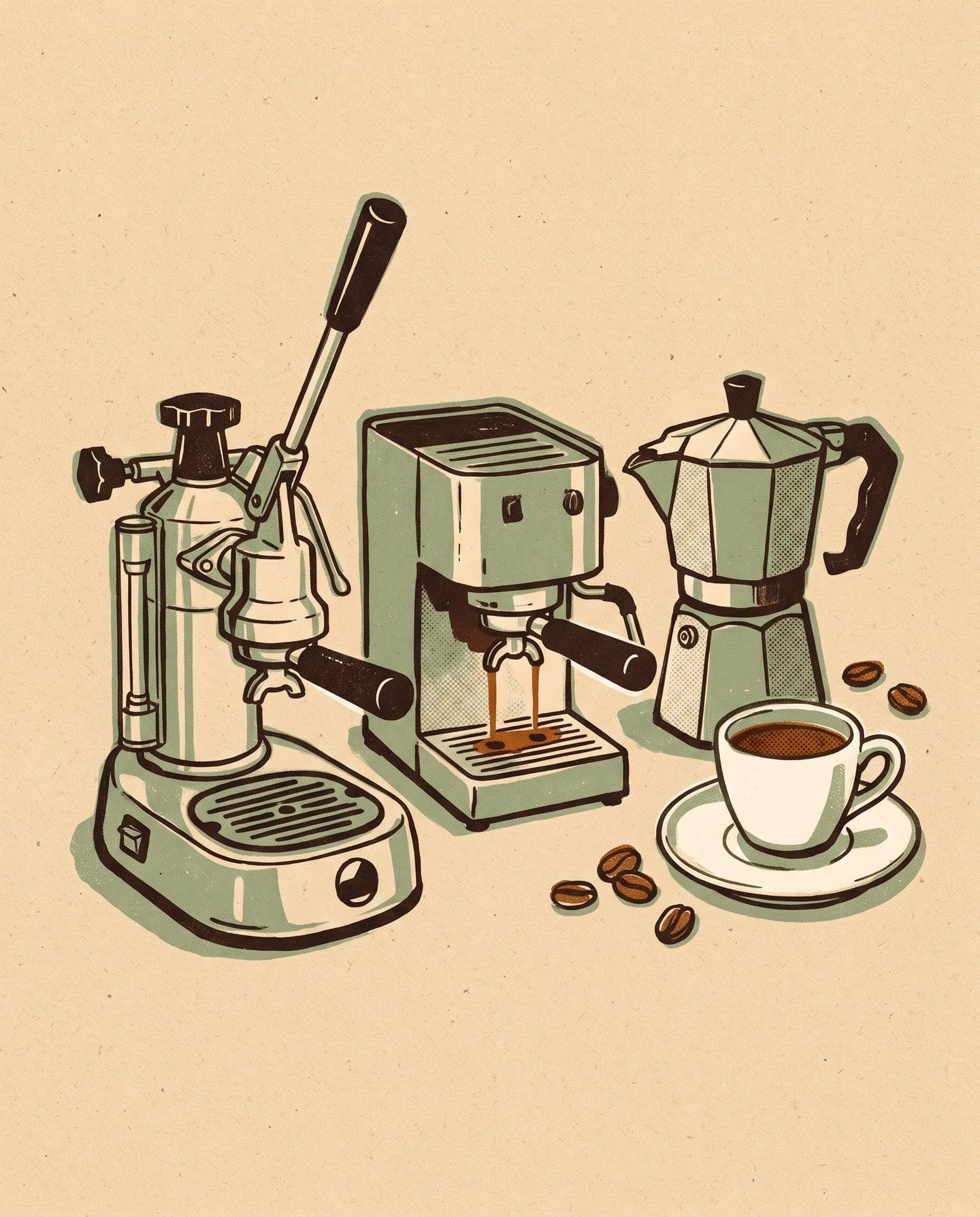
Cover illustration for The Best Italian Espresso Machines
Save it for laterPin this guide and find it again when you are ready to buy.Save to Pinterest

Common questions

What is the best Italian espresso machine brand?

It depends on what you want from it. Gaggia for most people, with the Gaggia Classic Pro; Rancilio for a machine that lasts decades; De'Longhi if you want the grinder built in; La Pavoni for a hand lever; Rocket for a prosumer machine that brews and steams at once; and Bialetti if you'd rather use the stove.

Is De'Longhi an Italian coffee machine brand, and is it made in Italy?

De'Longhi is an Italian company, in business since 1902, and the biggest espresso machine brand on this page. Its listing for the Arte Evo doesn't say where the machine is built. If made in Italy matters to you, Gaggia, Rancilio, Smeg, La Pavoni and Rocket all sell their machines as made there, and so does Bialetti for the Moka Express.

What espresso maker do Italians use at home?

Most use a moka pot on the stove, and the classic is the Moka Express. It makes a small, strong coffee rather than café espresso, which they drink as is or with hot milk.

Which Italian coffee maker brand is best for beginners?

For learning real espresso, Gaggia: the Gaggia Classic Pro is simple, easy to repair and has a café-size portafilter. If you'd rather have help, De'Longhi's Arte Evo grinds the beans and keeps the grounds in place while you tamp.

How long do Italian espresso machines last?

The best-built ones run for decades: Silvia owners talk in tens of years, and the Gaggia and the Silvia are machines you can open and repair. What kills them early is hard water, so pick the right water for an espresso machine and descale when the machine asks.

The verdict

Get the Gaggia Classic Pro

For most kitchens, it's the Gaggia Classic Pro: built in Italy, with a café-size portafilter and real steam power, for about $450, plus a good grinder. Pay more for the Rancilio Silvia if you want a machine for the next twenty years, or for the Rocket Appartamento if you steam milk for two every morning.

More from Kettle Nook