Moka Pot vs AeroPress: Which One Should You Buy?
The moka pot makes small, strong coffee for lattes. The AeroPress makes a smoother black mug in two minutes and rinses clean in seconds. Here's how they differ, and how to brew each.
I earn a commission when you buy through my links, at no extra cost to you. How that worksAmazon prices as of Nov 29, 4:18 AM ET, subject to change. Details
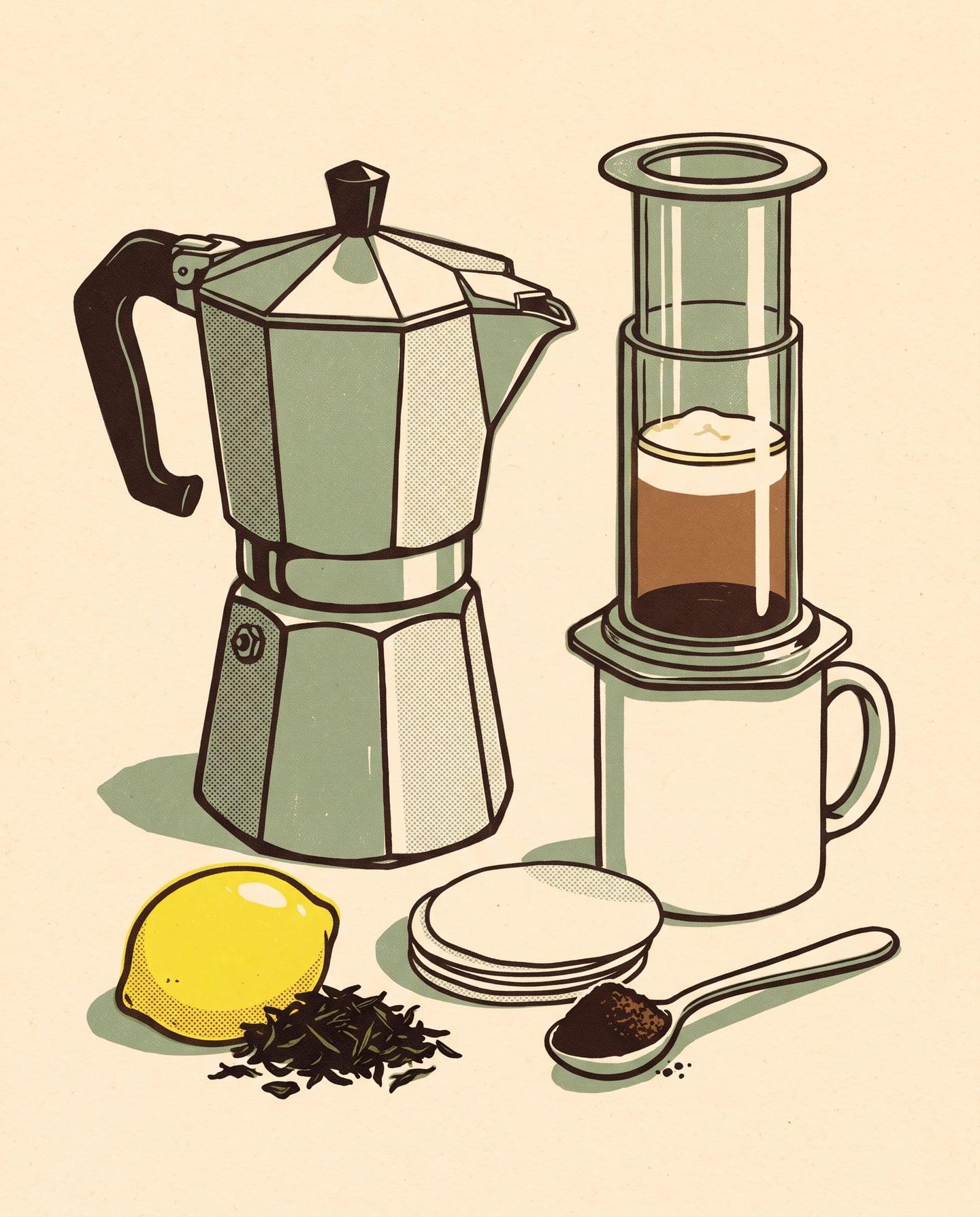
A moka pot is a little aluminum pot that sits on your stove: the water boils in the bottom, and steam pushes it up through the coffee into the top. An AeroPress is a plastic tube that sits on your mug: you pour hot water over the grounds, wait, and push the coffee through a paper filter by hand.
So the coffee is different. The Moka Express makes a small amount of strong, dark, almost syrupy coffee, the closest thing to espresso you'll get from a stovetop pot that costs about $50, and it's made for cappuccinos and lattes. The AeroPress makes a smoother, cleaner mug in about two minutes for about $30, and it's the one I'd get if you mostly drink your coffee black, one mug at a time.
Moka vs AeroPress: how the coffee tastes
Moka coffee is bold and heavy. It's concentrated, it coats your mouth, and dark roasts come out tasting of cocoa and toast. It can also tip into bitter, because the water reaches the coffee very hot and you have almost no say over how hot. It's also less consistent than most brewers: the same beans can taste a little different from one morning to the next.
AeroPress coffee is cleaner and softer. The paper filter holds back the fine grit that ends up at the bottom of a moka cup, so what you taste is the bean: chocolate and nuts in a medium roast, fruit in a light one. It isn't as strong as moka coffee, though it's still punchy, and you choose the water temperature, which makes it easy to keep bitterness down. AeroPress recommends 185°F (85°C).
If you like dark roasts and a coffee that tastes like a coffee bar, you'll be happier with the moka pot. If you buy light or fruity beans and want to taste them, get the AeroPress.
Which one is stronger?
The moka pot. It brews a small amount of coffee from a full basket of grounds, so it comes out concentrated, a bit like a long shot of espresso. A 6-cup Moka Express makes about 9 ounces (270 ml) in all, and Bialetti counts its sizes in espresso cups, not mugs.
Neither one makes true espresso, though. Espresso comes out of a machine at about 9 bars of pressure. A moka pot works at roughly 1 to 2 bars, and AeroPress puts its own hand press at about 2. There's no crema from either. The AeroPress can make a short, strong "espresso-style" coffee if you use less water, but it's a concentrate, not a shot.
AeroPress vs moka pot for a latte
For milk drinks, I'd pick the moka pot. Its coffee is strong enough to come through a cup of foamed milk, and the 6-cup pot makes enough for two lattes, or one big one. My macchiato vs latte guide has the moka latte step by step, with the milk frother I'd pair with it.
An AeroPress latte works too: brew a short, strong cup with less water and pour the milk over it. It just comes out milder, so you taste more milk and less coffee.

The Moka Express is the pot Alfonso Bialetti designed in 1933, still made in Italy, and the stovetop pick in my Italian espresso machines guide. It works on gas and electric stoves, and on induction with Bialetti's adapter plate. If it's just you, the 3-cup size makes about 4.3 ounces (130 ml), one strong coffee or a single latte, for about the same price.
Grind size for each
The moka pot wants a medium grind, a step coarser than espresso, and the AeroPress wants medium-fine, a little finer than drip. Bialetti says not to press the coffee into the basket, and if you find powder at the bottom of your cup, go coarser. With an AeroPress, grind finer if the cup is sour or weak, coarser if it's bitter. My grind size chart shows where both sit, and if you buy pre-ground coffee, an "espresso" grind is too fine for either one.
Speed, cleanup and travel
Speed. Once your kettle has boiled, an AeroPress takes about two minutes. A moka pot heats its own water on the stove and takes about five minutes, and you have to stay near it.
Cleanup. This is where the AeroPress wins easily. You push the used coffee out as a puck straight into the trash, rinse the press for a few seconds, and you're done; it can also go on the top rack of the dishwasher. A moka pot has to be unscrewed, emptied and rinsed in three parts, and Bialetti says plain water only: soap and the dishwasher damage the aluminum and spoil the taste. Keep the little safety valve on the bottom chamber clean, too.
Travel. The AeroPress weighs about 6.5 ounces without the scoop and stirrer, it doesn't break, and all it needs is hot water. The moka pot needs a stove or a camp burner, and the whole pot gets hot, handle included, so watch your fingers.

The Original is the AeroPress to get. Its chamber holds up to 10 ounces, enough for one standard mug, and it comes with a scoop, a stirrer and a pack of paper filters. It's the cheaper of the two, and it's what I'd buy for anyone who drinks a mug of black coffee in the morning, at home or on the road.
How to brew with a moka pot
These are Bialetti's steps for the Moka Express.
- Fill the bottom chamber with water up to the safety valve, not over it.
- Fill the basket with medium-ground coffee right to the top, level, with no mound, and don't press it down.
- Screw the top on tight and set the pot on the stove over low to medium heat. Bialetti says low and slow makes the better coffee.
- Listen. As soon as the pot starts to gurgle, turn off the heat. The coffee is ready; left on the stove, it sputters and turns bitter.
How to brew with an AeroPress
This is AeroPress's own recipe for one mug.
- Put a paper filter in the cap, rinse it with hot water, twist it onto the chamber and stand the chamber on a sturdy mug.
- Add 16 to 18 g of coffee, one heaping scoop, ground medium-fine.
- Pour in water at about 185°F (85°C) up to the 4 mark. Boiling water is fine if that's what you have.
- Stir for about 3 seconds, set the plunger in about half an inch and pull it back slightly so nothing drips through, then wait 30 seconds (60 if you use store-bought ground coffee).
- Press down gently and steadily until you hear a hiss, then stop.
So, which one?
- You drink lattes or cappuccinos at home, and you don't have an espresso machine: the Moka Express.
- You drink one mug of black coffee in the morning: the AeroPress.
- You like dark roasts and a strong, Italian-style cup: the moka pot.
- You buy light roasts and want to taste the bean: the AeroPress.
- You travel or camp, or hate doing dishes: the AeroPress.
If you're weighing more than these two, my guide to the best way to make coffee compares seven ways to brew, from pour-over to a drip machine.
What you need
- AeroPress Original one smooth mug in two minutes, about $30.$29.96
- Bialetti Moka Express small, strong coffee for lattes and dark roasts, about $50.$49.98
Common questions
Is an AeroPress just a French press?
No. Both soak the grounds in water, but a French press steeps for about four minutes and strains through a metal mesh, which lets fine grit and oils into the cup. An AeroPress steeps for a minute or so, then you press the coffee through a paper filter. You get a cleaner cup with no sludge at the bottom, and it's ready faster.
Does an AeroPress give you microplastics?
AeroPress says the Original's chamber and plunger are polypropylene, with a silicone seal, that every model has been free of BPA since 2009 and has never contained phthalates, and that its materials are approved by the FDA and the EU for contact with food. If you'd rather no plastic touched your hot coffee at all, a moka pot is aluminum wherever the coffee runs, apart from a silicone gasket, and my plastic-free coffee makers list a steel one.
Can you make espresso with an AeroPress?
Not real espresso. Espresso needs about 9 bars of pressure, and your arm can't get near that. What an AeroPress makes with less water is a short, strong coffee that works well in a latte or an Americano, but without crema. If espresso is what you really want, see my best espresso machines for home.