We earn a commission when you buy through our links, at no extra cost to you. How that works
Good decaf espresso should taste like your regular shot, minus the part that keeps you awake. The Kicking Horse Decaf gets closest. It's a dark roast from Central and South America that Kicking Horse describes as roasted hazelnut and chocolate, with a long finish, a profile that survives steamed milk. The caffeine comes out with water and carbon filters, the Swiss Water Process, and a 10 oz bag is about $15.
Straight shots in the thick, creamy Italian style are a different job, and Lavazza Dek does it for less: it's made for espresso machines and it's the cheapest per shot of the bags under 2 lb, about 68 cents a double. The rest of the list covers a sweeter single origin, organic on a budget, a five-pound bag and a Nespresso capsule.
You want one decaf for both shots and milk drinks, and a water-only process matters to you.
Skip it if
You like a bright, fruity espresso. This is a dark roast through and through; Blueprint's Huila is the more delicate cup.
Dark, chocolaty, and it doesn't taste like decaf
Kicking Horse describes the smell as deep chocolate with something nutty behind it. In the cup it's roasted hazelnut and chocolate with a full body and low acidity, the kind of taste that holds up best to milk, because a lighter roast tends to vanish under a cappuccino's worth of foam. Kicking Horse roasts it dark, recommends it for anything from a French press to espresso, and sells it organic and Fairtrade.
The decaf method is the one most people shopping for decaf are looking for. The green beans soak for a little over eight hours in a water solution that's run through carbon filters until, Kicking Horse says, 99.9% of the caffeine is gone. No solvent touches the coffee.
It works as a straight shot and it works in a flat white, so one decaf bag on the shelf is enough.
What owners report
One owner brewed it both ways, in a Chemex and as espresso, and called it fantastic in each. Another switched to decaf on her doctor's advice and says she can't tell the difference from her old coffee. A third likes that no chemical touches the beans. Complaints are hard to find.
Flaws but not dealbreakers
The 10 oz bag is small for an espresso habit: about 14 doubles at 19.5 g each.
The 1 lb bag costs more per ounce than the 10 oz on Amazon (about $1.75 against $1.51). The 2.2 lb bag is the one that saves money, at about $1.25 an ounce.
Dark roasts tend to leave more oil in a grinder than medium ones, so plan to clean the burrs more often.
Swiss Water ProcessCentral and South AmericaOrganic, FairtradeDark roast
2
Best value
Lavazza Dek
Arabica and robusta from Brazil and Vietnam, decaffeinated with carbon dioxide in Italy, and about 68 cents a double shot.
You want a classic Italian shot with a thick layer of crema, or your machine is a super-automatic.
Skip it if
You need it this week: Amazon shows it as available at a later date.
+−Read the full write-upHide the full write-up
The Italian bar decaf, and the cheapest shot from a small bag
Dek is the decaf an Italian café would pull. It blends arabica with some robusta, which is where a lot of the thick crema in Italian espresso comes from, and Lavazza decaffeinates it with carbon dioxide at its plant in Pozzilli, Italy. Lavazza describes it as creamy and full-bodied, with notes of roasted cereals, and says it's best in an espresso machine. Seattle Coffee Gear lists it as safe for super-automatic machines, which matters because oily beans can clog those.
Reviewers who've pulled it keep describing the same things: rich crema, dried fruit and brown sugar, smooth with milk. One also found it plain in a pour-over cone. That's fine: this is an espresso blend, and it's better at espresso.
At about $17 for 1.1 lb, it works out to about 68 cents for a 19.5 g double, the lowest price per shot among the bags here under 2 lb. Only the 5 lb Coffee Bean Direct gets lower.
Flaws but not dealbreakers
Robusta brings the crema and some bitterness. If you only drink all-arabica coffee, get the illy decaf.
One reviewer found it not dark enough for people used to very dark espresso roasts.
It's a blend, not a single origin, so don't expect a lot of nuance in a straight shot.
CO2 decaffeinatedArabica and robustaRoasted in ItalyMade for espresso machines
3
Best medium roast
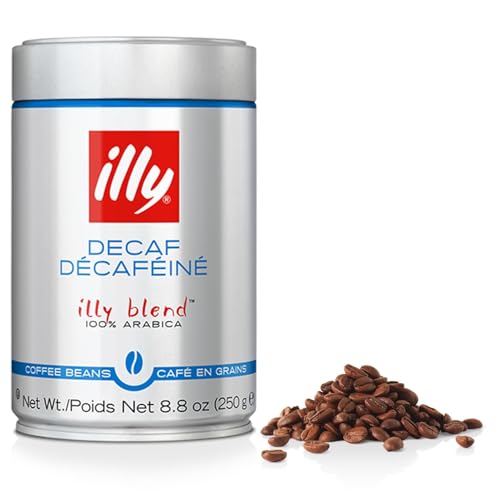
illy Decaf Classico
illy's Classico blend, all arabica and roasted medium, decaffeinated with water and carbon dioxide.
You drink your espresso black and prefer it smooth and sweet over dark and roasty.
Skip it if
You go through a lot of decaf. The 8.8 oz can costs about $1.79 an ounce, the most here after the capsules.
+−Read the full write-upHide the full write-up
A gentle shot, all arabica
illy uses its Classico blend here, all arabica and roasted medium, and decaffeinates it with water and carbon dioxide. illy's own tasting notes are caramel, toasted bread and chocolate. In one published tasting, the caramel came with a little orange blossom and jasmine, and the coffee tasted most like itself from an espresso machine or a moka pot.
A medium roast makes a softer, sweeter shot than the Kicking Horse or the Coffee Bean Direct. It's the one I'd pick if you drink espresso straight and find dark roasts harsh.
Flaws but not dealbreakers
8.8 oz is about 13 doubles.
It costs more than other Italian decafs, about $1.23 a double against 68 cents for Dek.
CO2 with water100% arabicaMedium roastCaramel, chocolate
4
Best sugarcane decaf
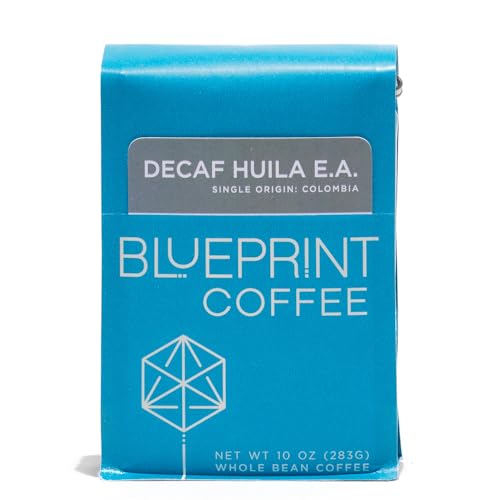
Blueprint Decaf Huila
A single Colombian coffee decaffeinated with ethyl acetate made from sugarcane, sweet like nougat and apple.
You like the sweet, fruity espresso of a specialty café and want it in decaf.
Skip it if
You mostly drink lattes. A delicate coffee like this gets lost under a lot of milk faster than a dark roast.
+−Read the full write-upHide the full write-up
Sweet and delicate, from one Colombian region
Most decaf espresso is a dark blend. This one is a single coffee from Huila, Colombia, roasted in St. Louis and sold for filter, drip or espresso. Blueprint's tasting notes are graham, apple, brown spice, nougat and malt, and it offers an extra-fine espresso grind if you'd rather not grind it yourself.
The caffeine comes out with ethyl acetate, a solvent derived from sugarcane. The beans are steamed, then bathed in water and ethyl acetate, and Blueprint says the result is 0.01 to 0.03% caffeine. It's a solvent process, which some buyers avoid, but it's a different solvent from the one in the skip list below, and US rules allow it specifically for decaffeinating coffee and tea.
Flaws but not dealbreakers
A single-origin shot is fussier to dial in than a dark blend: expect to adjust your grind over a few shots.
About $1.65 an ounce, the priciest bag here after the illy.
Sugarcane processHuila, ColombiaRoasted in St. LouisEspresso or filter
5
Best under $15
Allegro Decaf Organic Espresso Bel Canto
An organic espresso blend with some Ethiopian coffee in it, decaffeinated by Swiss Water, for about $12.
You want organic and water-processed for under $15.
Skip it if
You want a heavy, dark shot. This one is a medium roast.
+−Read the full write-upHide the full write-up
Organic, Swiss Water, about $12
Bel Canto is Allegro's espresso blend, here in decaf. It's organic, decaffeinated by Swiss Water, and roasted medium. Allegro's notes are deep, berries and cocoa powder. About a fifth of the blend is Ethiopian and the rest South American, and pulled as a shot it gives dark chocolate and toasted grain. The roaster who published that tasting liked it best with milk, in flat whites and cappuccinos.
At about $12 for 12 oz it's about 69 cents a double, nearly as cheap as Dek, and it's the least expensive water-processed bag here.
Flaws but not dealbreakers
12 oz is about 17 doubles.
Medium roast: less body under milk than the Kicking Horse.
Swiss Water ProcessOrganicMedium roastSouth America and Ethiopia
6
Buying in bulk
Coffee Bean Direct CO2 Decaf Espresso
A dark Italian roast of South American arabica, decaffeinated with CO2, that gets cheap per shot in the 5 lb bag.
You drink decaf every day and want a dark Italian roast in bulk.
Skip it if
You make a few shots a week. Five pounds of beans goes stale before you finish it.
+−Read the full write-upHide the full write-up
A dark Italian roast by the pound, or five
Coffee Bean Direct roasts South American arabica dark, in an Italian style, and decaffeinates it with CO2. Its notes are wine, nut and spice, with what the roaster calls a moderate crema and a bittersweet chocolate finish. It's also sold ground for espresso if you need it.
The 1 lb bag is about $24, which is ordinary. The reason to buy it is the 5 lb bag, about $73, which brings a double down to about 63 cents. If a household drinks decaf espresso daily, that's the cheapest way to do it.
Flaws but not dealbreakers
The 1 lb price is no bargain: about $1.03 a double, against 68 cents for Dek.
Only moderate crema, by the roaster's own description.
CO2 decaffeinatedItalian roastAlso 2.5 and 5 lbLow acidity
7
Best decaf pod
Nespresso Arpeggio Decaffeinato
The decaf version of Nespresso's intensity 9 Arpeggio, cocoa-heavy enough to come through milk, at about 95 cents a capsule.
You have a Nespresso Original machine and want a decaf that still tastes strong in a latte.
Skip it if
You own a Vertuo machine: Original capsules don't fit it.
+−Read the full write-upHide the full write-up
The Nespresso decaf that stands up to milk
If your espresso machine is a Nespresso Original, this is the decaf capsule to buy. Nespresso makes it as the decaf version of Arpeggio, rated intensity 9, and says it's just as dense and creamy, with the same cocoa notes. Nespresso also suggests it for milk drinks, because it's intense enough to come through.
Each capsule makes a 0.85 oz ristretto or a 1.35 oz espresso, and a box of 50 comes to about 95 cents a capsule. Nespresso decaffeinates its coffee either with water or with carbon dioxide, and doesn't say which one goes into which capsule.
Flaws but not dealbreakers
About 95 cents for a single shot, more than a whole double of Dek, Bel Canto or the 5 lb Coffee Bean Direct.
Nespresso doesn't name the decaf method for this capsule.
Intensity 9Original lineRistretto or espresso5 boxes of 10
Why decaf espresso at all
Maybe it's an evening latte, a pregnancy, a doctor's advice, or a second shot that shouldn't keep you up. Whatever the reason, you still want it to taste like espresso, from a machine at home or a Nespresso, and any of these bags works in a moka pot or an AeroPress too.
Every method starts the same way: green, unroasted beans are soaked so the caffeine can move out, then dried and roasted like any other coffee. What changes is what pulls the caffeine out.
Swiss Water Process. Water and carbon filters, no solvent, done at Swiss Water's plant near Vancouver. Kicking Horse says it removes 99.9% of the caffeine. Used by the Kicking Horse Decaf and Bel Canto Decaf.
Mountain Water Process. The same idea, with water from the Pico de Orizaba glacier in Mexico. Equator uses it for the decaf espresso it sells on its own site, also at 99.9%.
CO2. Carbon dioxide under very high pressure pulls the caffeine out of soaked beans; Nespresso says it takes five to seven hours. Lavazza, illy and Coffee Bean Direct use it.
Sugarcane, or ethyl acetate. A solvent made from sugarcane, rinsed through steamed beans. US rules allow ethyl acetate specifically as a solvent for decaffeinating coffee and tea. Blueprint's Huila uses it.
Methylene chloride. A solvent method; Starbucks calls it the Direct Contact Method. The FDA allows up to 10 parts per million of it left in roasted decaf coffee, and consumer groups have asked it to ban the solvent, with no decision yet. Starbucks doesn't name it on the bag; brands that avoid it usually say so, like the Swiss Water Process in the Kicking Horse title.
What "decaf" means in the US. The number you'll see everywhere is 97%: the National Coffee Association says decaffeination removes around 97% of the caffeine, and that's the working standard in the US. It's industry practice rather than a figure written in federal rules, and nobody routinely checks bags against it. The European Union and Canada are stricter, at 0.1% caffeine left in roasted coffee. In the cup, the FDA says decaf coffee typically has 2 to 15 mg in 8 ounces, and that people who react strongly to caffeine may want to avoid decaf altogether. A shot holds much less than a mug: illy puts a regular 1 oz espresso at about 60 mg, and removing 97% of that leaves about 2 mg.
If you want no solvent at all, pick Swiss Water or CO2. Sugarcane ethyl acetate is a solvent, but not methylene chloride. All three are legal and common; this is about what you'd rather drink.
Compare by the double
Bag sizes run from 8.8 oz to 5 lb, so compare by the shot. At a 19.5 g double: about 63 cents from the 5 lb Coffee Bean Direct, 68 cents for Dek, 69 for Bel Canto, $1.04 for Kicking Horse, $1.23 for illy.
Roast date and bag size
Decaf goes stale like any coffee, and Consumer Reports suggests buying only what you'll drink in one to two weeks. At two doubles a day, a 10 oz bag lasts about a week and a 1 lb bag about 12 days; with a bigger bag, keep a week or two's worth out and freeze the rest. And grind it right before you pull the shot; if your grinder can't go fine enough for espresso, the burr grinder guide has one that does.
The most famous decaf espresso, and the one to pass on if you care how the caffeine came out. Starbucks has said it uses the Direct Contact Method, with methylene chloride, for most of its decaf, and named only two exceptions, neither of them this one. It's also about $29 for 16 oz, about $1.27 a double, and shown as available at a later date on Amazon. The same coffee comes in Starbucks by Nespresso capsules.
A dark roast decaf, Swiss Water processed, with notes of caramel and spice. It's a fine idea at about $30 a pound, or $1.87 an ounce, but the Kicking Horse Decaf is also dark and Swiss Water for about $1.51 an ounce.
How I picked
Whole-bean decaf sold on AmazonDecaf method named by the brandSold or recommended for espressoUnder about $1.30 a double shotTasting notes published by the roaster
I started from the decaf espresso bags Amazon returns for "decaf espresso whole bean," "decaf espresso beans Swiss Water" and "sugarcane decaf," plus the decaf espressos that specialty roasters sell on their own sites, and looked at twenty bags and pods. For each, I found the decaf method on the brand's own page, its Amazon listing or its retailer's page, and converted every bag to a price per 19.5 g double, the dose Stumptown uses in its espresso recipe. I read owner reviews on Kicking Horse's site and tastings published by other roasters, and the FDA, the National Coffee Association and the Code of Federal Regulations for the rules. Prices are Amazon's on September 28, 2026.
Save it for laterPin this guide and find it again when you are ready to buy.Save to Pinterest
Common questions
What are the best decaf espresso beans?+−
The Kicking Horse Decaf for most people: dark, chocolaty, Swiss Water processed, and good in both shots and lattes. Lavazza Dek is the best value and the most Italian-style shot, and the illy decaf is the pick for a softer, all-arabica espresso.
Does decaf espresso have any caffeine?+−
A little. Decaffeination removes around 97% of the caffeine, and the FDA puts decaf coffee at 2 to 15 mg per 8 oz cup. A single decaf shot works out to a couple of milligrams, against about 60 mg for a regular shot by illy's figure.
What is the Swiss Water Process?+−
A way of removing caffeine from green coffee with water and carbon filters instead of a chemical solvent. The beans soak for about eight hours while the caffeine moves into the water, which is filtered until about 99.9% of the caffeine is gone. The beans are then dried and roasted.
Can you use any decaf beans for espresso?+−
Yes, any decaf will go through an espresso machine. Bags roasted for espresso, like the ones here, are picked and roasted to taste good in a short, concentrated shot, which is the same difference as with regular beans.
Does decaf espresso taste different from regular?+−
Often a little flatter, because some flavor leaves with the caffeine. A dark roast hides the difference best, especially in milk. One owner of the Kicking Horse Decaf says she can't tell, and Nespresso sells Arpeggio Decaffeinato as just as dense and creamy as the regular capsule.
The verdict
Kicking Horse Decaf, as a shot or a latte
Kicking Horse Decaf is the one to buy: dark and chocolaty, decaffeinated with water alone, and good as a shot or under milk for about $15. If you'd rather have a thick Italian shot for less, Lavazza Dek does it for about 68 cents a double, and the 5 lb Coffee Bean Direct is the cheapest way to drink decaf espresso every day.