Swiss Water Decaf Coffee, Explained
Water, time and a carbon filter, no solvent. Here's how the caffeine comes out, what's left in your cup, and the bags worth buying.
We earn a commission when you buy through our links, at no extra cost to you. How that works
The Swiss Water method takes the caffeine out of coffee before it's roasted, using only water, temperature, time and carbon filters. No chemical solvent touches the beans, and the result is 99.9% caffeine-free.
If you just want a bag, Kicking Horse is the one I'd buy: an organic, Fairtrade Swiss Water decaf for about $15 a 10-ounce bag. Below: how the method works, how much caffeine is left, and how to spot the real thing on a label.
How the Swiss Water Process works
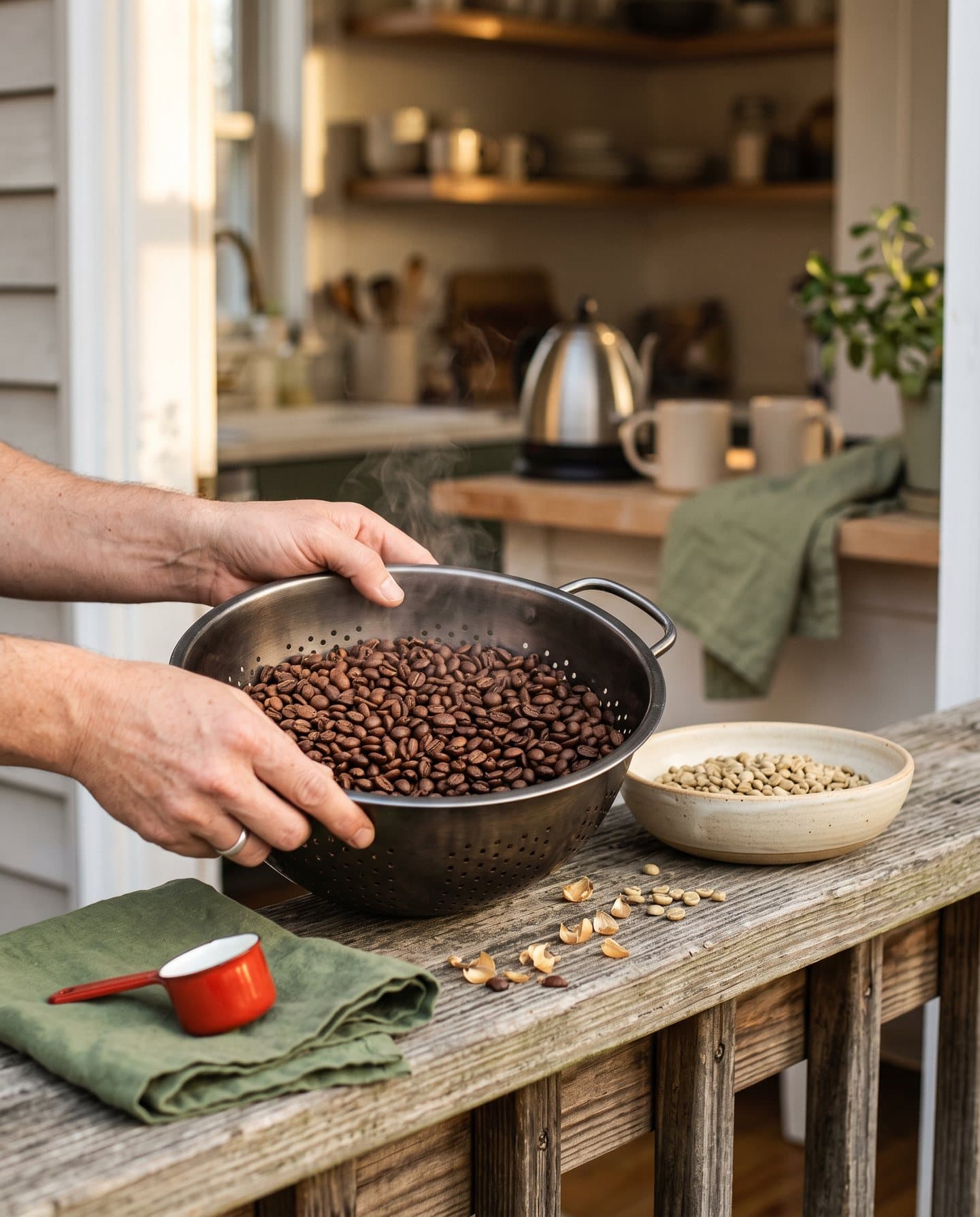
Caffeine dissolves in water, and so does almost everything else that makes coffee taste like coffee. The trick is to pull out only the caffeine. Swiss Water does it in four steps, on green beans that haven't been roasted yet:
- Clean and hydrate. The green beans are cleaned, then hydrated so they expand.
- Let the caffeine move out. The beans go into what Swiss Water calls Green Coffee Extract: water that holds the soluble parts of coffee, minus the caffeine. Since the water already carries everything else, caffeine is the only thing that leaves the beans. Kicking Horse says the soak lasts just over eight hours.
- Filter and reuse. The extract, now carrying caffeine, runs through carbon filters that catch it. The cleaned extract goes back to work on the next batch of beans, in a closed loop.
- Dry. The beans are dried with high air flow at low temperatures, then shipped to roasters.
The soak is repeated until the coffee is 99.9% caffeine-free. And despite the name, nothing goes to Switzerland. Swiss Water decaffeinates in British Columbia, near Vancouver, and opened a new plant in Delta in 2021.
How much caffeine is left?
Counter Culture, Kicking Horse and Sweet Maria's all say 99.9% of the caffeine is removed. That's a higher bar than the US rule: to be sold as decaf here, coffee needs about 97% of its caffeine gone, according to Swiss Water and the National Coffee Association.
For a cup of decaf in general, whatever the method, the FDA's range is 2 to 15 mg per 8 ounces. A regular brewed cup has about 95 mg, going by USDA data. Either way, a decaf in the evening is a small fraction of your usual morning mug.
How it compares with other decaf methods
There are five common ways to decaffeinate coffee. Two use only water, one uses carbon dioxide, and two use a chemical solvent.
| Method | What takes the caffeine out | Chemical solvent? | Who uses it |
|---|---|---|---|
| Swiss Water | Water and carbon filters, in Canada | No | Kicking Horse, Counter Culture, Don Pablo |
| Mountain Water | Glacier water from Pico de Orizaba, in Mexico | No | Equator |
| CO2 | Carbon dioxide and water | No, though Kicking Horse groups it with the non-water methods | illy |
| Ethyl acetate ("sugarcane decaf") | Ethyl acetate (Blueprint's comes from sugarcane), on steamed beans | Yes | Blueprint |
| Methylene chloride | Methylene chloride, the "direct contact" method | Yes | Starbucks, for most decafs |
US rules allow both solvents for decaffeinating coffee, and the FDA limits methylene chloride left in roasted decaf to 10 parts per million. Picking Swiss Water is a matter of taste and preference, not of steering clear of something banned. If you pull shots at home, the best decaf espresso beans compares decaf bags across these methods.
Does Swiss Water decaf taste different?
Every decaf changes a little, because the beans are soaked and dried again. Sweet Maria's, a green coffee seller that works with Swiss Water, finds it changes the flavor least of the methods it has tried: send a fruity coffee in and you get a fruity decaf back. Counter Culture, which uses it for Slow Motion, its year-round decaf, says it brings out the body of the coffee.
Decaffeination also changes the color of the green beans. That's why Don Pablo warns that its Swiss Water beans look darker than their roast level. They aren't dyed.
How to tell if a decaf is Swiss Water
Look for the name on the bag or the listing. The process is patented and trademarked, so if a coffee doesn't explicitly say Swiss Water, it probably isn't, as Sweet Maria's puts it. "Water process" on its own can mean another method, like Mountain Water from Mexico, which is also solvent-free but isn't the same thing.
A few big brands people ask about:
- Peet's moved all of its decaf beans and K-Cup pods to water processes in January 2022, and Swiss Water is one of its suppliers. So a Peet's decaf is water processed, but not necessarily Swiss Water.
- Folgers uses ethyl acetate, according to the FAQ on its Canadian site: the beans are steamed, treated with ethyl acetate, then steamed again.
- Starbucks relies mainly on methylene chloride for its decafs, the company told a nutritionist quoted by Tasting Table. The two exceptions it named were Komodo Dragon decaf and VIA Instant Decaf Italian Roast.
Which Swiss Water decaf to buy
For most people, a bag of whole beans with Swiss Water named right on it.

If you drink decaf every day and want a bigger bag, the Don Pablo comes in two pounds for about $40. It's Colombian, roasted medium-dark, and Don Pablo describes it as mild and sweet, with hints of citrus and a finish of chocolate and walnut.
Swiss Water decafs worth buying
- Kicking Horse Decaf nutty and chocolaty, my first choice, about $15 for 10 ounces.$9.49 as of 12:32 PM ET
- Don Pablo Colombian Decaf a medium-dark Colombian in a two-pound bag, about $40.$39.99 as of 12:32 PM ET
- Van Houtte Swiss Water Decaf K-Cups Swiss Water decaf in K-Cups, 24 pods for about $20, if you brew with a Keurig.$19.95 as of 12:32 PM ET