The Best Water Filter for Your Espresso Machine (and the Best Water for Coffee)
Use the cartridge your machine's maker sells, change it on time, and never pour in plain distilled water. Here's what good coffee water looks like, and what to use in a Keurig or a kettle.
I earn a commission when you buy through my links, at no extra cost to you. How that worksAmazon prices as of Nov 29, 4:18 AM ET, subject to change. Details
Run your espresso machine on tap water through the cartridge its maker sells, change that cartridge on time, and never fill the tank with plain distilled water.
The best water filter for an espresso machine is the one made for it. If you have a Breville with a filter holder in the tank, that's the Claro Swiss, a pack of two for about $25, one every 90 days. If your tap water is very hard, or your machine has no filter at all, skip the filter and make your own water: distilled water plus a stick of Third Wave Water.
What makes water good for coffee
A cup of coffee is almost all water, and the minerals in that water do two jobs. Calcium and magnesium help pull flavor out of the grounds. Too much of them, though, and they build up as scale inside your machine and the coffee tastes flat or chalky.
The Specialty Coffee Association has a target for brewing water. Roughly:
- Total dissolved solids: about 150 mg/L, anywhere from 75 to 250 is fine.
- Calcium hardness: about 68 mg/L (4 grains per gallon), from 17 to 85.
- Alkalinity: about 40 mg/L.
- Chlorine: none. You'll taste it.
You want water with a little mineral in it, and not too much. That's why distilled water is a bad idea on its own: with nothing in it, the coffee comes out thin and sour, and the water pulls minerals out of the metal it touches. Moccamaster warns against distilled and reverse osmosis water for exactly that reason, and my Moccamaster review has the details.
Find out how hard your water is
Before you buy anything, find out what you're starting with. Your water utility's yearly water quality report often lists hardness, or you can test it in thirty seconds with a strip: dip it in a glass of cold tap water and match the color to the chart.
To test your water
- Varify Water Hardness Test Strips 150 strips for about $9, enough to test the tap and then the filtered water.$9.47
- Soft water, up to about 60 mg/L: a carbon filter is all you need, mostly to take out chlorine.
- Moderately hard to hard water, about 60 to 180 mg/L: use your machine's own cartridge, change it on time and descale when the machine asks.
- Very hard water, above that: change the cartridge more often, or make your own water.
If your machine came with test strips (Breville ships them with the Barista Touch Impress, for example), use them: you'll set the hardness in the machine's menu, and it adjusts how often it asks you to descale.
The best water filter for an espresso machine
Buy the filter your machine was designed for. It sits snugly in the holder, so no water slips around it, and the machine reminds you when it's due.
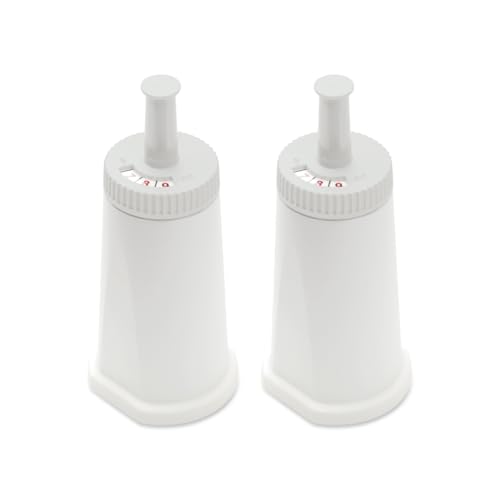
Breville's Claro Swiss fits the Barista Touch and Touch Impress, the Oracle family and the Dual Boiler (model numbers BES880, BES881, BES920, BES980, BES985, BES990 and BES995), plus the Luxe drip brewers. Soak it, set the date dial, drop it into the holder in the tank, and replace it every 90 days, sooner if your water is hard. Breville says a fresh filter means you'll descale less often. Check the model number on the bottom of your machine against the list on the box before you order.
Other brands work the same way. Jura's Claris Smart filters talk to the machine, which knows when you've put one in. Philips' AquaClean filter lets its super-automatics skip descaling for up to 5,000 cups, as long as you change it when it asks. If your machine is in my best espresso machines for home, its manual names the right cartridge.
What about a Brita? A pitcher filter is great for taste, but it isn't made to soften water. Brita's Elite filter is certified to cut lead and chlorine, and hardness isn't on its list. Filling your espresso machine from a Brita still leaves most of the scale-forming minerals in.
When to make your own water instead
If your tap water is very hard, or your machine has no filter slot, the best water is the one you build. Third Wave Water sells sticks of minerals you mix into distilled or reverse osmosis water. The Espresso Machine Profile is made for espresso machines: it has calcium and magnesium for flavor, and it leaves out the chlorides that can corrode a boiler. The company says its minerals don't form scale the way tap water does.

It's a little more work, since you buy distilled water by the gallon. In return, every shot gets the same water, and your machine needs far less descaling. Use the Espresso profile, not the Classic: Third Wave says the Classic has a small amount of chlorides and isn't meant for espresso machines.
The best water to use in a Keurig
Keurig's own advice is bottled or spring water, and filtered tap water is fine too. It tells you not to use softened or distilled water.
The best water to use in a Keurig is the easy one: filtered tap water, or spring water if you'd rather not filter. Many Keurig brewers from the 2.0 line on take a charcoal filter on a handle inside the reservoir. If yours does, keep it in and change the cartridge every two months.
For a Keurig
- Keurig Water Filter Starter Kit Keurig's filter handle and charcoal cartridges, about $15.$14.98
Then descale when the light comes on. For the cup itself, my best K-Cups has the pods worth buying.
The best water for tea
Fresh, cold, filtered water. Tea is more delicate than coffee, so you taste chlorine and hard water sooner.
Hard water also leaves that thin, oily-looking film on top of a cup of black tea. That's the tea's polyphenols reacting with the calcium in hard water, and researchers at ETH Zurich found that the harder the water, the thicker the film. A squeeze of lemon breaks it up, and softer water prevents it.
A pitcher filter is the simplest fix here, since tea doesn't need the minerals an espresso machine wants protected. If you're choosing a tea to go with it, start with my best tea brands.
Which water fits your setup
Get the Claro Swiss if you own a Breville with a filter holder in the tank, and change it every 90 days. Get Third Wave Water and a few gallons of distilled water if your tap water is very hard or your machine has no filter at all.
Get the Keurig filter kit if your Keurig has a spot for a filter in the tank, and fill it with filtered tap or spring water. Get the Brita Elite pitcher if you mostly drink tea or drip coffee and your tap tastes of chlorine. And if you don't know how hard your water is, get the Varify strips before anything else.
Everything in this guide
- Breville Claro Swiss Water Filter the cartridge for Breville's filter machines, two to a pack, about $25.$24.95
- Third Wave Water Espresso Machine Profile minerals for very hard water, about $29 for about 60 gallons.$29.00
- Keurig Water Filter Starter Kit filter handle and cartridges for a Keurig, about $15.$14.98
- Brita Elite Water Filter Pitcher chlorine-free water for tea and drip coffee, about $31.$31.44
Common questions
Can I use distilled water in an espresso machine?
Not on its own. Water with no minerals makes thin, sour espresso, and it slowly pulls metal out of the boiler and pipes. If you want to use distilled water, add minerals made for espresso machines, such as Third Wave Water's Espresso profile.
Is bottled water good for coffee?
Spring water often is, but brands vary a lot. Look for a label that lists total dissolved solids somewhere around 75 to 250 mg/L. Skip anything labeled distilled or purified for brewing, and skip mineral waters with a lot of minerals, which are too hard.
How often should you change an espresso machine water filter?
Every two to three months for most cartridges. Breville says 90 days, and sooner if your water is hard. Set the date dial or the machine's filter reminder when you put a new one in, and it does the remembering for you.
Do I still need to descale if I use a water filter?
Yes, just less often. A filter slows scale down, it doesn't stop it. Descale when your machine asks, or as often as its manual says; my best coffee makers explains why the warranties insist on it.