Ice water, a valve and a few hours: what a Kyoto tower makes that a pitcher can't, which one fits under your cabinets, and the Hario that needs no babysitting.
We earn a commission when you buy through our links, at no extra cost to you. How that works
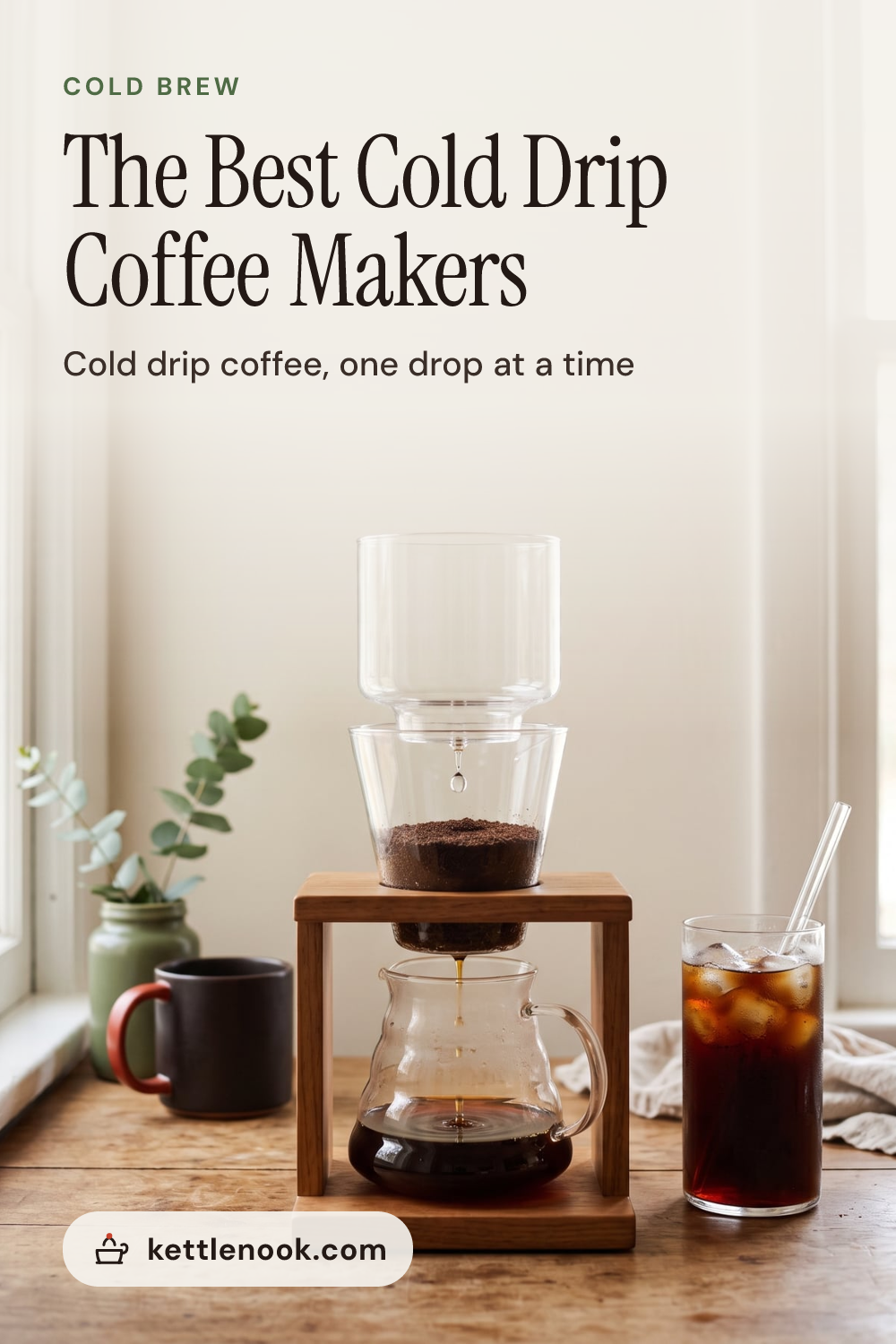
Ice water sits at the top, a bed of ground coffee waits in the middle, and one drop falls every second or so. Three or four hours later there's a carafe of coffee at the bottom that you pour straight over ice, no watering down. That's cold drip, the Kyoto style you see on café counters, and the Yama tower is the tower to get. It's hand-blown glass on a wood frame, it makes 32 oz a batch, and when a beaker breaks, Yama sells you that one piece for about $30 instead of a whole new tower.
It's the tower the others copy, and part of the pleasure is watching it work: the drops falling onto the coffee, the brew winding down a glass coil into the carafe. It's also about $295 and 30 inches tall, so check your counter before you fall for it. If it won't fit, the Nispira tower is the same kind of tower for about $95, and the Hario Shizuku skips the valve altogether: fill it, walk away, and it's done in about an hour.
Hand-blown glass, a ceramic filter and a glass coil on a wood frame, making 32 oz in three to four hours. Every glass piece is sold on its own if one breaks.
Both use cold water and no heat, and both come out smoother and less bitter than hot coffee poured over ice. The difference is how the water meets the coffee.
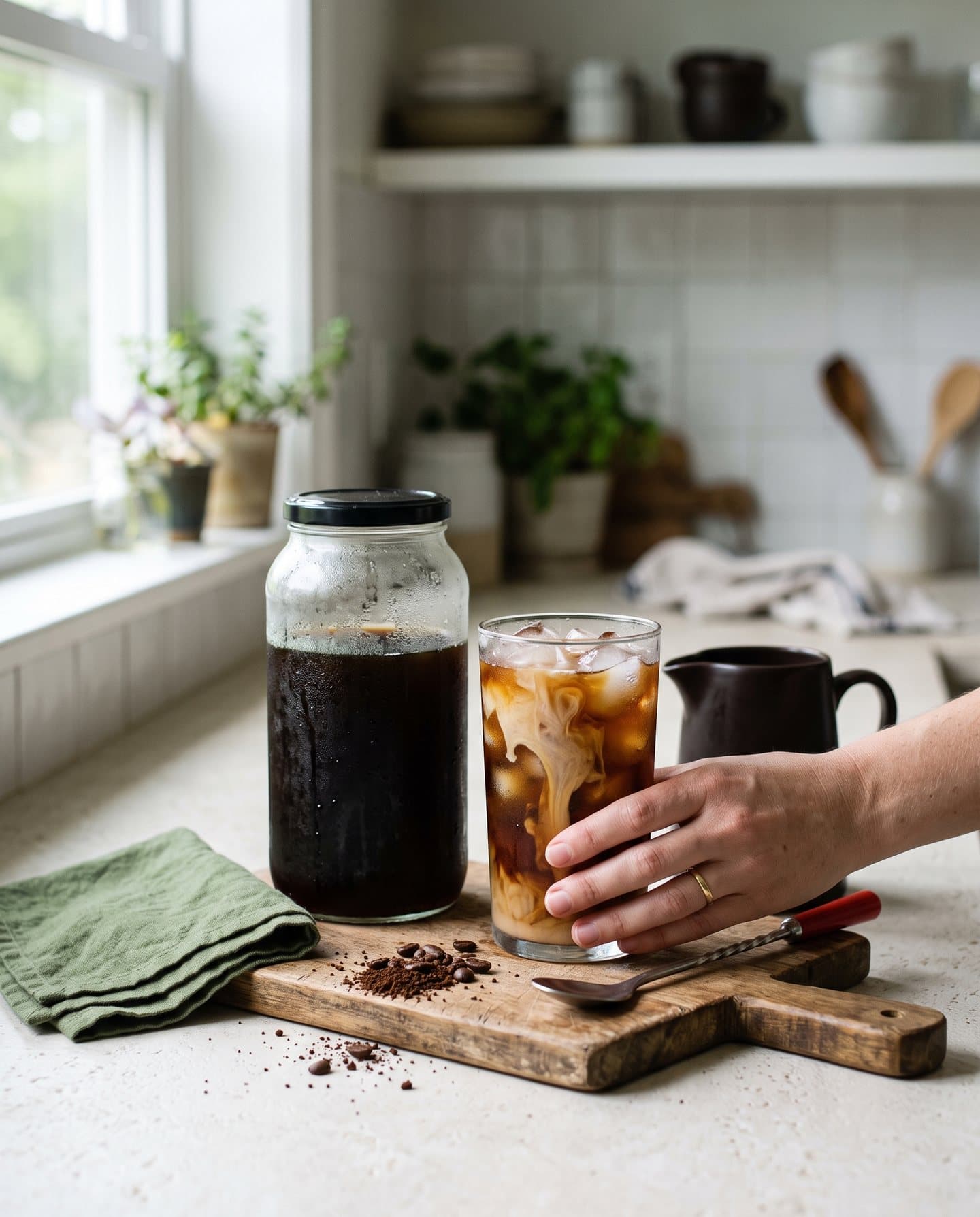
Regular cold brew is immersion: the grounds soak in water for 12 to 24 hours, then you strain them out. Most recipes make a strong concentrate that you cut with water or milk, one to one in my own recipe and up to two or three parts for stronger ones. One reviewer who brewed both kinds side by side found that cup rich, almost syrupy. My cold brew guide covers that method and the pitchers for it.
Cold drip never lets the coffee sit in a pool. Water drips through the grounds a drop at a time and falls out the bottom, so the coffee comes out ready to drink, over ice or straight. It's lighter-bodied and more fragrant, and it tends to show off what's different about one bean from the next. It's also faster, three to five hours on most towers against 12 to 24 for immersion. The price is attention. The drip slows down as the water level at the top drops, so on most towers you come back and open the valve a little.
If you want a big jar of concentrate for lattes all week, buy an immersion pitcher. If you want a clean, bright glass of iced coffee from beans you like, this page is for you.
The six drip makers, best first
11 · Best overall
Yama 6-8 Cup Cold Drip Tower
Hand-blown glass, a ceramic filter and a glass coil on a wood frame, making 32 oz in three to four hours. Every glass piece is sold on its own if one breaks.
You want the real Kyoto tower, you have a spot with 30 inches of height, and you like the idea of watching your coffee get made.
Skip it if
It has to fit under your cabinets, or you want to set it up at night and forget about it. The drip needs checking.
Three beakers and a glass coil
Ice and water go in the top beaker. A valve lets it fall, drop by drop, onto the coffee in the middle beaker, which sits on a ceramic filter with a paper filter laid over the grounds to spread the drops. The coffee then winds down through a glass coil into the carafe at the bottom. Yama says a batch takes about three hours; one coffee equipment retailer suggests about four and no more than six, and gives it up to 14 days in the fridge.
The glass is borosilicate, blown by hand, and all of it can go in the dishwasher. What sets it apart from the cheaper towers is that nothing here is a dead end: Amazon sells the middle and top beakers for about $30 each, and Yama sells the ceramic filter too. For a glass tower you'll load, empty and wash a hundred times, that's what makes the price make sense.
Grind medium-coarse to coarse, about like sea salt, close to a French press grind. If you want a reference, my grind size chart has it.
What owners report
Twelve owners have reviewed the tower on Yama's own site, and the praise is for the coffee and the look: one calls it very clean and a real talking point on the counter. One made it the household's weekend treat once a couple of tries had sorted out the ratio. Three of the twelve complain about the valve. One says it either drips too fast or stops altogether, so it's never set and forget. Another calls it touchy but found the glass thicker than they expected and the cold brew excellent. Someone who wanted a drop a minute to infuse bourbon with citrus and vanilla couldn't get it below five or six.
The most useful review is a recipe. That owner used 100 g of coffee, ground between V60 and French press, with 500 g each of water and ice in the top. At three hours they topped up with 100 g more of each, and at just over four hours the brew was done with a little ice left, about 12 parts water to one of coffee. Another ran it overnight at a drop every three seconds and got coffee they call strong but subtly sweet.
Flaws but not dealbreakers
About 30 inches tall, so it lives on an open counter or a shelf, not under a cabinet.
The valve needs a few adjustments over a brew, and it's hard to set very slow.
Glass everywhere: loading it and washing it takes care, and it takes time.
How much room it takes
About 30 inches tall, 10 wide and 9 deep. Measure the spot before you order.
Hand-blown borosilicateSpare beakers about $30Glass coilDishwasher-safe glass
2
Best value
Nispira 6-8 Cup Cold Brew Drip Tower
The same stacked-glass design on a wood stand, with an adjustable valve, for about a third of the Yama's price.
You love the look of a tall tower and want to try Kyoto-style coffee for under $100.
Skip it if
You're new to cold drip and want instructions that walk you through the first batch. Nispira's are brief.
+−Read the full write-upHide the full write-up
A tall tower for about a third of the price
Stacked glass chambers on a wood stand, a valve at the top and a carafe at the bottom: from across the room, it's the Yama. It's shorter, at 19 inches, and Nispira puts a batch at 6 to 8 cups, about 1 to 1.2 liters, over 8 to 12 hours depending on your grind and how fast you set the drip.
For a first batch, start around 50 g of medium-coarse coffee per 500 ml of ice and water, a drop a second, and adjust from there. The one Nispira a coffee reviewer has brewed with, the small BD-6 further down this page, had a valve that was quick and precise to set, even though the rest of it disappointed.
Flaws but not dealbreakers
Nispira calls its instructions brief, so plan on your first batch being a trial run.
The brown version is about $95; the gray and other listings run about $10 more for the same tower.
How much room it takes
19 by 7.5 by 7.5 inches. Still too tall for most spots under a cabinet, but it fits on a shelf where the Yama won't.
Adjustable valveWood frameFilters included8 to 12 hours a batch
3
Most compact tower
Hario Clear Water Dripper
A Japanese-made tower under 18 inches tall, with a stainless steel filter so there are no papers to buy.
You want a proper valve tower that's easy to fit in a kitchen, and you'd like to stop buying paper filters.
Skip it if
You're looking for the Kyoto look of wood and a glass coil. This one is clear resin and glass, more lab than furniture.
+−Read the full write-upHide the full write-up
A real tower, under 18 inches
Hario, the Japanese glassmaker behind the V60, builds this one in Japan: a glass water bowl on top, a stainless steel tap, the coffee chamber, and a glass pot underneath, all held in a clear resin stand. It stands 455 mm, just under 18 inches, and makes 780 ml, about 26 oz, which Hario counts as 2 to 6 cups.
The filter is stainless steel, so there's nothing to buy each time, and the cup keeps a bit more body than it would through paper. Set the tap for a batch of three to five hours. On Hario's own store, the one buyer who left a review liked it enough to buy three more as gifts.
Flaws but not dealbreakers
About $225, not far from the Yama.
A steel filter lets a little fine sediment through; if you want a spotless glass, lay a paper filter over the grounds.
Hario's newer version, the WDCR-6, sells for about $10 more, so check which one you're looking at.
How much room it takes
150 by 129 by 455 mm, about 6 by 5 by 18 inches, and about 4 pounds.
Made in JapanStainless filter and tapClear resin stand3 to 5 hours
4
Easiest to use
Hario Shizuku Slow Drip Brewer
The drip speed is built in, so you fill it and walk away. Hario says the water runs through in about an hour.
The valve is the part that puts you off. This one has none: you fill it and it drips at its own speed.
Skip it if
You want to play with the drip rate and slow a batch down for a sweeter, stronger cup.
+−Read the full write-upHide the full write-up
Fill it, and it's done in an hour
The Shizuku ("drop" in Japanese) is the easy way into cold drip. The drip speed is set by the part itself, so there's nothing to turn and nothing to check. Hario says the water runs through completely in about an hour, hours quicker than the towers above.
It's 14 inches tall and makes 600 ml, about 20 oz. The upper bowl and the pot are glass, the strainer is stainless steel, and a paper filter sits in the coffee holder. When the drip is done, the lid from the top bowl fits the pot, so it goes straight into the fridge. Hario says most parts are dishwasher safe.
Flaws but not dealbreakers
One speed only. If your cup comes out weak, the fix is a finer grind or more coffee, not a slower drip.
The lid, holders and drip part are silicone and plastic.
No drip adjustmentAbout 1 hourTop lid doubles as pot lidMostly dishwasher safe
5
A small batch, sturdy glass
Bruer Cold Brew System
A squat glass hourglass 10.5 inches tall that makes 20 oz in about four hours, takes standard paper filters and goes in the dishwasher.
You drink one or two glasses a day and want a dripper small and sturdy enough to live next to the coffee maker.
Skip it if
You need it this week: it's out of stock on Amazon at the moment.
+−Read the full write-upHide the full write-up
The Kickstarter dripper that stuck around
The Bruer started on Kickstarter in 2013 and is still the compact dripper that turns up on cold brew lists. It's a glass hourglass 10.5 inches tall: ice water on top, a silicone valve, the coffee in the lower half on a steel filter with a paper filter, and 20 oz of cold brew in as little as four hours. Bruer puts 100 paper filters in the box and gives the coffee up to two weeks in the fridge.
A coffee reviewer who brewed with it found the cup full-bodied, sweet and mellow, a little lighter and more fragrant than an immersion brew, and liked that it's sturdy and takes standard paper filters. A food magazine's reviewer found the brewing almost meditative, and thought it suits someone who enjoys reading the instructions. Every part can go in the dishwasher. Two tips from that first reviewer: keep ice in the top, because warming water forms bubbles that can block the tiny valve, and don't go over 60 g of fresh coffee, which swells up to the drip ramp.
Flaws but not dealbreakers
The silicone valve is slow to respond, and the drip is hard to see through the fogged glass.
Out of stock at the moment.
20 oz a batch is two big glasses of iced coffee.
100 filters includedAll parts dishwasher safeSpare parts sold by Bruer60 g coffee max
6
Best under $25
Bincoo Glass Ice Coffee Dripper
A small dripper with a flow knob and a reusable fine mesh filter, for finding out if you like cold drip before spending more.
You're curious about cold drip but not ready to spend $100 on it.
Skip it if
You want glass all the way through. The top chamber is plastic.
+−Read the full write-upHide the full write-up
Cold drip for the price of a bag of beans
A small dripper with a knob on top that Bincoo says you set to one drop every one to three seconds, a fine reusable mesh filter, and a glass carafe underneath that holds 450 ml. The upper chamber is PCTG, a clear plastic. Bincoo suggests anything from one part coffee to eight of water for something strong to one to fifteen for a lighter glass.
Twenty dollars tells you whether cold drip is worth a tower.
Flaws but not dealbreakers
A plastic chamber holds the water, where every other pick uses glass.
Bincoo doesn't publish the height or what the knob is made of.
Flow knob, 1 to 3 s per dropGlass carafePlastic top chamberAbout $20
If a tower isn't for you
A tower suits you if you want iced coffee that drinks like the beans taste and don't mind spending a few minutes on it. If you'd rather mix a big batch on Sunday and pour it all week, an immersion pitcher is simpler and cheaper, and my cold brew guide picks one. If you'd rather not brew at all, a cold brew concentrate from the store is the shortcut.
Before you buy a tower
Where it will stand
Measure first. The Yama needs about 30 inches, the Nispira 19, the Hario Clear just under 18, the Shizuku 14 and the Bruer 10.5. Check the gap under your cabinets, and leave room above the top to pour in the ice water.
Valve or no valve
A valve lets you make the drip slower for a sweeter, stronger cup, and it asks you to check on it, because it slows as the top empties. The Shizuku has no valve at all. If you'll brew while you're out or asleep, that's the one.
How much you drink
Two glasses a day: the Bruer or the Shizuku, about 20 oz a batch. A household or guests: the Yama at 32 oz or the Nispira at up to 1.2 liters.
Paper, ceramic or steel
Paper gives the cleanest glass and costs a little each batch. Ceramic, on the Yama, is reusable and clean but needs rinsing after every brew. Steel, on the Hario Clear, costs nothing and lets a little more body and fine sediment through.
A starting recipe
Most towers leave the recipe to you, so here's where to begin. Use about 1 g of coffee for every 10 to 12 g of ice and water, ground medium-coarse. For a 32 oz tower, that's around 80 to 100 g of coffee. Wet the grounds first with a little water so they settle evenly, lay a paper filter on top if your tower uses one, then fill the top with half ice, half water and set the drip to about one drop a second. Check it every hour and open the valve a touch as it slows.
Slower makes a stronger, sweeter cup. Faster makes a lighter one. Store it sealed in the fridge and drink it within a week or so; it tastes sweeter after a night's rest. Grind right before you brew if you can: a burr grinder gives you the even, medium-coarse grounds a slow drip needs, and my grind size chart shows what that looks like.
Nispira's small 600 ml dripper. When a coffee reviewer brewed with it, the valve was excellent and everything else wasn't: very fragile glass, no lid on the carafe, a filter in a size only Nispira sells, and no manual. It's advertised at 30 to 40 minutes and took over 90. The Shizuku costs less and asks nothing of you.
It turns up when you search for a cold brew maker, but it's a hot drip machine with a quick cold brew setting. It doesn't drip cold water through the coffee over hours, so it isn't this kind of coffee.
How I picked
True slow drip, not immersionSold on AmazonHeight published, 10.5 to 30 inchesCapacity published, 450 ml to 32 ozSpare parts or a reusable filter
I started from the cold drip towers and drippers that Amazon returns for cold drip searches, plus the towers named in the best-known cold brew guides, and ended with sixteen. For each one I read the maker's page for height, capacity, materials and brew time, then what Coffee Review and Bon Appétit found when they brewed with the Bruer and the Nispira, and the dozen owner reviews on Yama's own store. Prices are Amazon's on September 28, 2026.
Save it for laterPin this guide and find it again when you are ready to buy.Save to Pinterest
Common questions
What's the difference between cold drip and cold brew?+−
Cold brew soaks the grounds in water for 12 to 24 hours and usually makes a concentrate you dilute. Cold drip lets ice water fall through the grounds a drop at a time for three to five hours, and the coffee comes out ready to drink. Drip is lighter and more fragrant; immersion is richer and heavier.
How long does cold drip coffee take?+−
Three to five hours on most towers at about a drop a second, and longer if you slow it down. The Hario Shizuku, which has a fixed drip, takes about an hour. Big café towers can run 8 to 12 hours.
What grind should I use for cold drip?+−
Medium-coarse to coarse, about like sea salt, close to a French press grind and coarser than for a pour-over. Too fine and the water pools on top; too coarse and it runs straight through and tastes weak.
Should I put ice in the top chamber?+−
Yes, about half ice and half water. It keeps everything cold through the brew, and one reviewer found that water warming up in the top can form bubbles that block a small valve.
Is cold drip stronger than cold brew?+−
Cold brew concentrate is stronger in the jar, but it's meant to be cut with water or milk before you drink it. Cold drip is meant to be drunk as it comes, over ice. In the glass, cold drip tastes lighter and brighter.
The verdict
Buy the Yama if you have 30 inches to spare
The Yama 6-8 Cup is the cold drip tower to own if you have the room: beautiful glass, a ceramic filter, 32 oz a batch, and spare parts when something breaks. If $295 or 30 inches is too much, the Nispira tower does the same job for about $95, and the Hario Shizuku makes cold drip in an hour without a valve to watch.