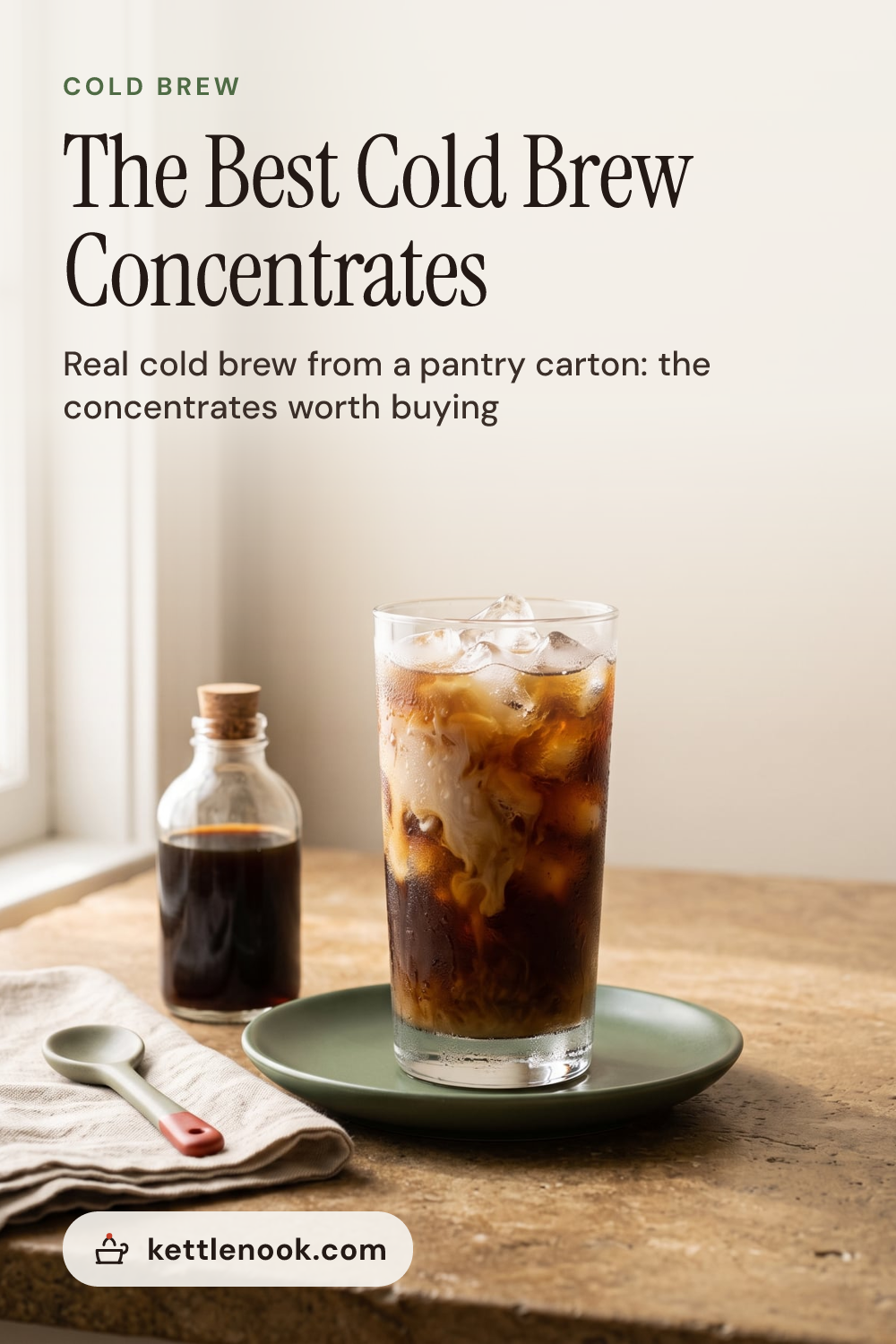
Pour some over ice, add water or milk, and you have cold brew without the overnight wait. How much of each to pour, what a glass costs, how strong it is, and how long an open bottle lasts.
We earn a commission when you buy through our links, at no extra cost to you. How that works
Wandering Bear is the cold brew concentrate to buy: organic Peruvian coffee steeped cold, in a carton that sits in the pantry until you open it. Pour one part over ice with three parts water and you get a small, strong glass with 150 mg of caffeine, about two espresso shots' worth, for about $1.60. Wandering Bear calls it smooth, yet strong, and its ready-to-drink cold brew came second in a ranking of twenty brands, praised for its strength and how little bitterness it has.
Plan for the week, though: an open carton keeps seven days, so it suits a house where two people drink it. If it's just you and one latte a day, Jot is the easier bottle. It isn't cold brew in the strict sense: Jot makes it with its own extraction process, about 20 times stronger than brewed coffee, so a single tablespoon in cold milk is the whole latte, and an open bottle keeps two to three weeks.
A concentrate is coffee made with much more coffee per cup of water than a regular brew, so you finish it yourself: over ice, with water or milk, sometimes hot. Most of the bottles here are true cold brew, steeped for hours in cold water. Jot, with its own extraction process, is the exception, and it does the same job in the glass. The one thing to read on the label is the mix. The makers here go from one to one (Starbucks, Chameleon) to one to four (Java House, Explorer), up to a single tablespoon or teaspoon per cup for Jot and Javvy. The less water a maker tells you to add, the fewer glasses in the bottle, which is why the Starbucks bottle, about $9, and the Java House, about $29, end up close per ounce of iced coffee: about 14 cents for Starbucks, 18 for Java House.
Strength follows the mix. A 12 oz Starbucks glass has about 235 mg of caffeine; a Javvy cup has 60 to 80. And check how long it keeps once the cap is off: from a week for Wandering Bear to ten weeks for Javvy. If you drink one glass a day, that's what decides the size you should buy.
Seven bottles, from Wandering Bear down
11 · Best overall
Wandering Bear Organic Cold Brew Concentrate
Organic Peruvian coffee at one part to three of water, 150 mg in a 6 oz glass, in a carton that sits in the pantry until you open it.
You like your iced coffee strong and black, you want organic coffee in it, and you'd like a spare carton waiting in the cupboard.
Skip it if
You're the only one drinking it, one small glass a day. The carton lasts seven days in the fridge once it's open; the Jot keeps two to three weeks.
A pantry carton that's properly strong
Wandering Bear makes its concentrate from organic Peruvian Arabica, one part concentrate to three of water. That gives 21 glasses of 6 oz, each with 150 mg of caffeine, at about $1.60 a glass. Six ounces is a small glass for that much caffeine, which is why it drinks strong. The twenty-brand ranking that put the ready-to-drink version second liked exactly that: strength, with little bitterness.
The carton is shelf-stable until you open it, so you can keep a spare in the cupboard. Once it's open, it gets seven days in the fridge, the shortest in this guide. Finishing it in a week means three glasses a day, or two people pouring one or two each.
Flaws but not dealbreakers
About $33 for one carton, the most you'll pay up front for any bottle here, and about $1.60 for a small 6 oz glass.
Seven days once open.
A 6 oz glass is small, so expect to pour two.
21 servingsUSDA OrganicShelf-stable until opened7 days once open
2
Best for lattes
Jot Ultra Coffee
One tablespoon in 6 to 10 oz of water or milk makes a cup with about 150 mg of caffeine, and the small bottle makes 14 of them.
You want iced lattes at home, you don't have room for a quart bottle, and you'd rather measure a spoon than a cup.
Skip it if
You want decaf (Jot doesn't make one), or you mostly drink big glasses of black cold brew, where a quart like the Starbucks Signature Black costs less per ounce.
+−Read the full write-upHide the full write-up
A latte in one spoon
Jot says its coffee is 20 times stronger than regular brewed coffee, so one tablespoon is the whole dose: add 6 to 10 oz of water or milk, hot or cold. Stirred into cold oat milk over ice, it keeps its flavor instead of disappearing under the milk. Jot says each tablespoon has 140 to 150 mg of caffeine.
The bottle is small, about 200 ml, and it's the one that fits the door of a crowded fridge. Keep it cold from the day it arrives: Jot asks you to refrigerate it before and after opening, and to finish an open bottle within two to three weeks. That's 14 cups in about half a month, so a daily habit uses it up in time.
What owners report
Bold and smooth, say the people who write about it. One reviewer who swapped it in for her usual coffee found it almost too intense, with a nutty smell, and more like an espresso or an iced Americano than a mellow cold brew. In a latte with oat milk, that strength was the point. Two large buying guides put Jot first for taste. The complaint is price: at full retail, reviewers work it out to about $1.70 to $1.85 a cup.
Flaws but not dealbreakers
Jot doesn't call its method cold brew. It says it uses its own extraction process; the Amazon listing talks about a smooth cold brew flavor.
About $1.50 a cup, twice the price of a Javvy cup.
No decaf.
How long a bottle lasts
Fourteen tablespoons, and two to three weeks once open. One cup a day finishes it in time; one cup every other day doesn't.
14 cups a bottleAbout 150 mg per tablespoonHot or iced2 to 3 weeks once open
3
Best value
Starbucks Cold Brew Concentrate Signature Black
About $9 for 64 oz of iced coffee once you add water, the cheapest bottle here.
You drink iced coffee most days and you want it cheap.
Skip it if
You want a coffee with real character. One ranking of twenty cold brews called its flavor mediocre.
+−Read the full write-upHide the full write-up
A big bottle for about $9
Pour 6 fl oz over ice, add 6 fl oz of water, and you have the drink Starbucks has in mind: a 12 oz glass with about 235 mg of caffeine. A 32 oz bottle makes five of those, about $1.80 each, or 64 ounces of iced coffee in all, from the cheapest bottle in this guide. Starbucks calls it a medium-bodied blend with subtly sweet chocolate notes, and this Signature Black is unsweetened; there's a separate sweetened version, so check the label.
Not everyone likes the taste. Some guides call it a crowd-pleaser; one ranking of twenty cold brews put it 14th, noting a bitter aftertaste, especially on this Signature Black, and a weaker flavor than the word concentrate suggests. Another guide found a slightly chalky finish on the flavored Caramel Dolce version.
Flaws but not dealbreakers
About 235 mg a glass. Two glasses in a day already puts you past the 400 mg the FDA cites for most adults.
Once it's open, Starbucks gives it 14 days.
Some reviewers notice a bitter aftertaste on the Signature Black.
Makes 64 ozUnsweetenedMedium body, chocolatyFinish within 14 days
4
Twenty glasses from one bottle
Java House Colombian Cold Brew Concentrate
A one-to-four concentrate, so a 32 oz bottle stretches to 20 glasses, each with 135 mg of caffeine.
You drink big glasses of cold brew black or with milk, and you'd like one bottle to last a few weeks of mornings.
Skip it if
You like your cold brew bold. People who want a punch tend to find this one light.
+−Read the full write-upHide the full write-up
Twenty glasses from a quart
One part concentrate to four of water or milk means a 32 oz bottle makes 20 glasses of 8 oz, about $1.43 each, with 135 mg of caffeine per glass. Java House steeps it for more than 12 hours from Colombian Arabica and describes molasses, cocoa and a hint of fruit. You can pour it over ice, heat it, or mix a single glass at a time, since the bottle reseals.
On taste, opinions split more than for any bottle here. One big buying guide named it the best for a strong taste; a ranking of twenty brands found it light and watered down. If you want it stronger, go one to three and count on fewer glasses.
What owners report
On Java House's own site, one customer says her daughter barely shared the bottle with her, and her own sister heated it up, loved it and asked for the link. Another has been drinking it for more than a year and says they've stopped buying cold brew at the café. A third likes the taste and says it's easy on the stomach.
Flaws but not dealbreakers
Java House doesn't say how long an open bottle keeps.
Lighter than the one-to-three Wandering Bear, which some people like and others don't.
20 glassesColombian, 100% ArabicaSteeped 12+ hoursDecaf version exists
5
Dark roast, for milk
Chameleon Espresso Cold Brew Concentrate
An organic dark roast Chameleon describes as chocolate, roasted nuts and vanilla, mixed one to one, about $10 a bottle.
You drink your cold brew with milk and like a dark, chocolatey roast.
Skip it if
You need to know the caffeine: Chameleon doesn't publish it.
+−Read the full write-upHide the full write-up
A dark roast for iced lattes
Chameleon blends organic coffee from Guatemala, Colombia and Peru or Honduras, steeps it for more than 11 hours, and sells this espresso roast as chocolate, roasted nuts and vanilla. Mix it one to one: 6 oz of concentrate and 6 oz of water or milk over ice, or 3 oz with 3 oz of hot water or steamed milk. That's about five iced glasses or ten hot cups a bottle, about $2 per iced glass.
Its regular Black concentrate is out of stock on Amazon right now, and this is the one to get instead. Put it in milk: one ranking of twenty brands found Chameleon's range lackluster and weak, closer to iced coffee than to an intense cold brew, and the dark espresso roast is the one with enough body to stand up to milk.
Flaws but not dealbreakers
No caffeine figure on the bottle or on Chameleon's site.
No shelf life after opening on Chameleon's page either.
Five iced glasses per bottle, tied with Starbucks for the fewest here.
USDA OrganicDark roast5 iced or 10 hot servingsSteeped 11+ hours
6
Best under $1 a cup
Javvy Coffee Concentrate
A teaspoon per cup, up to 35 cups from a 6 oz bottle, and ten weeks in the fridge once it's open.
You want your coffee cheap and a bottle you won't have to finish in two weeks.
Skip it if
You like a big, bold cup. A teaspoon gives 60 to 80 mg, closer to a small drip coffee than to a Starbucks cold brew.
+−Read the full write-upHide the full write-up
A teaspoon a cup, and it keeps
Javvy (the brand used to be spelled Javy) asks for one or two teaspoons in 6 to 8 oz of water or milk. The 6 oz bottle makes up to 35 cups, about 74 cents each on Amazon, the cheapest caffeinated cup in this guide. Unopened, it keeps for a year; once open, it lasts ten weeks in the fridge, so one cup a day finishes the bottle well before then.
One reviewer's routine is a good picture of it: a teaspoon in a jar with eight ounces of oat milk and some ice, stirred, creamy and pleasant. The Original contains natural flavors along with coffee and water, and one buying guide noticed a slight acidity.
Flaws but not dealbreakers
The Original lists natural flavors, which not everyone wants in plain coffee.
A slightly acidic edge when drunk black.
About $26 for a 6 oz bottle is a lot up front, even if it works out to about 74 cents a cup.
Up to 35 cupsNo sugar10 weeks once open12 months unopened
7
Best decaf
Explorer Cold Brew Daydreamer Decaf
Organic, fair trade and decaffeinated by the Swiss Water process, at 0 to 2 mg of caffeine per ounce, with 20 glasses to a bottle.
You want an iced coffee late in the afternoon or after dinner and still want to sleep.
Skip it if
You want caffeine: this one is decaf, and Explorer's regular Classic is out of stock on Amazon right now.
+−Read the full write-upHide the full write-up
Decaf that still tastes like cold brew
Explorer decaffeinates the Daydreamer with the Swiss Water process and lists it at 0 to 2 mg of caffeine per ounce of concentrate. The coffee is organic and fair trade. Mix one part with four of water or milk, 1 to 2 oz of concentrate for 6 to 8 oz, and a bottle makes 20 glasses of 8 oz, about 72 cents each at the Amazon price.
Explorer makes the same concentrate at four strengths, Classic at 100 mg per ounce, Maverick at 150, Seeker at 50 and this decaf. That's handy if you mix your own half-caf at home, with the Java House or any regular bottle.
What owners report
On Explorer's site, one buyer calls the Classic the best cold brew she's had, and another drinks it with almond milk and finds no bitterness at all. A third drinks the extra-strong version while his pregnant wife drinks the low and no-caffeine ones all day. Two large buying guides named Explorer for its decaf and its range of strengths.
Flaws but not dealbreakers
Explorer doesn't list flavor notes for its concentrate.
Nor does it say how long an open bottle keeps.
Swiss Water decafOrganic, fair trade20 glassesHot or iced
If you want it ready to drink
Every bottle above gets poured and cut with water or milk. If you'd rather drink it straight from the bottle with nothing added, what you want is ready-to-drink cold brew (SToK, Califia Farms, La Colombe cartons), which is a different shelf and a different price per glass.
Or make your own
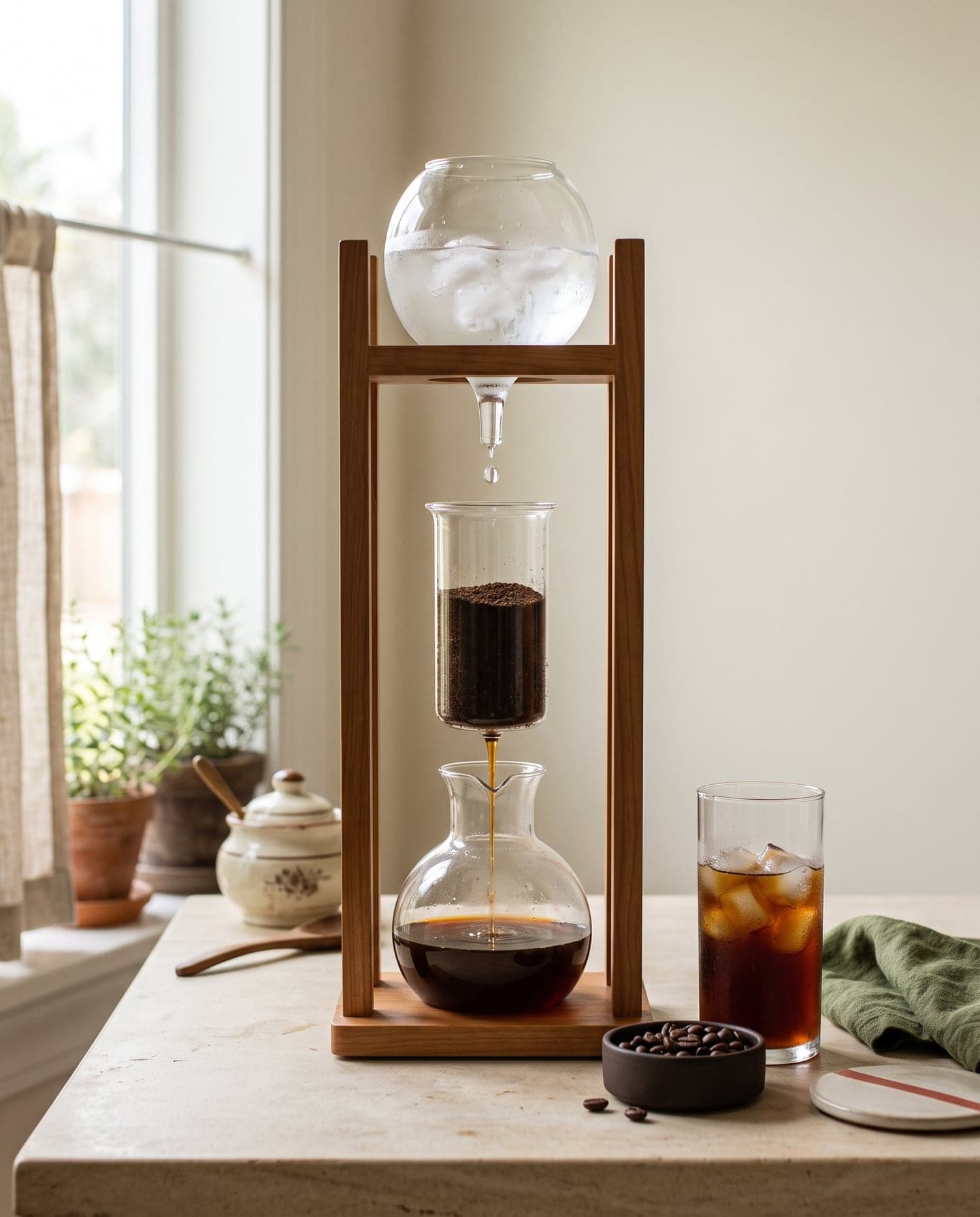
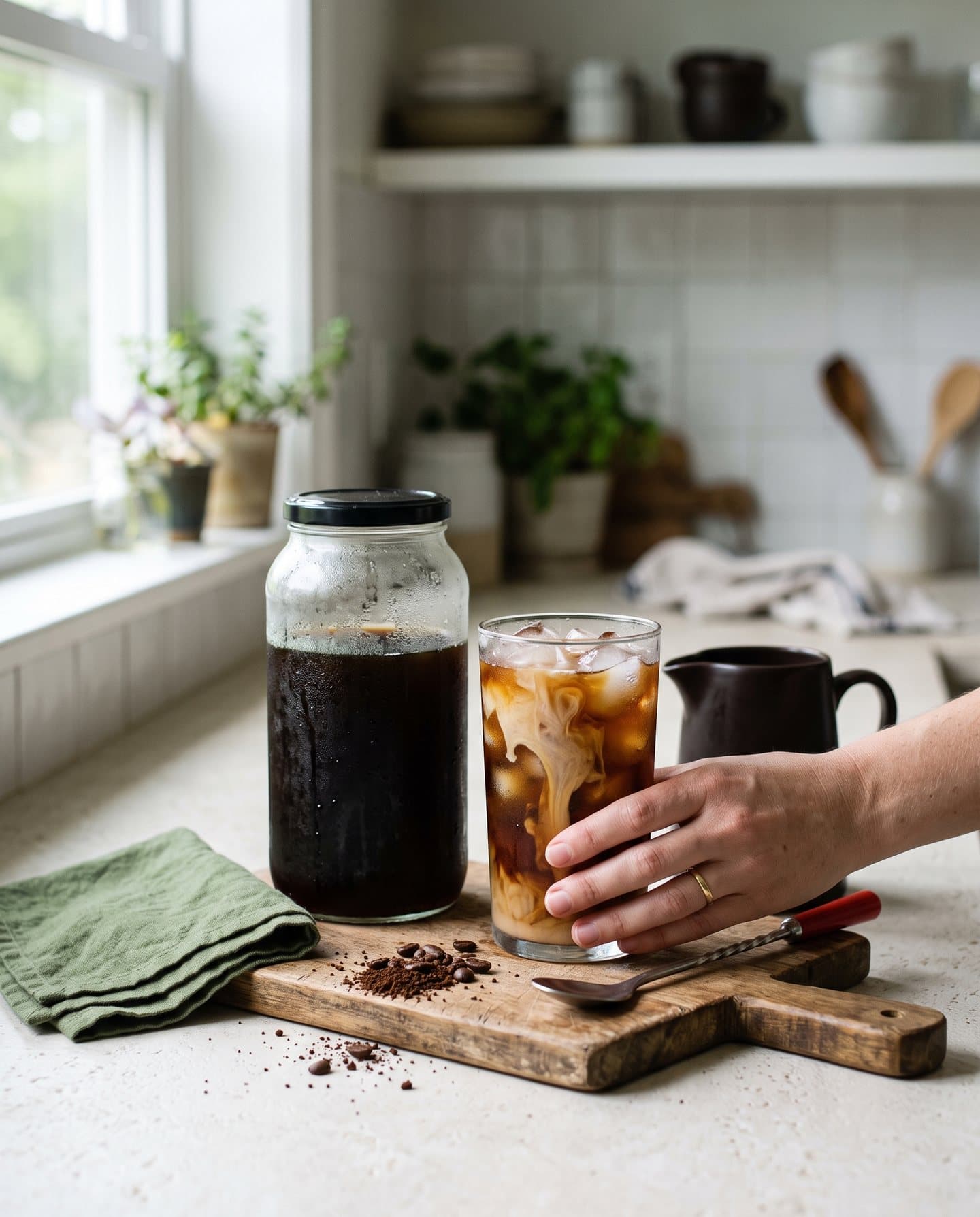
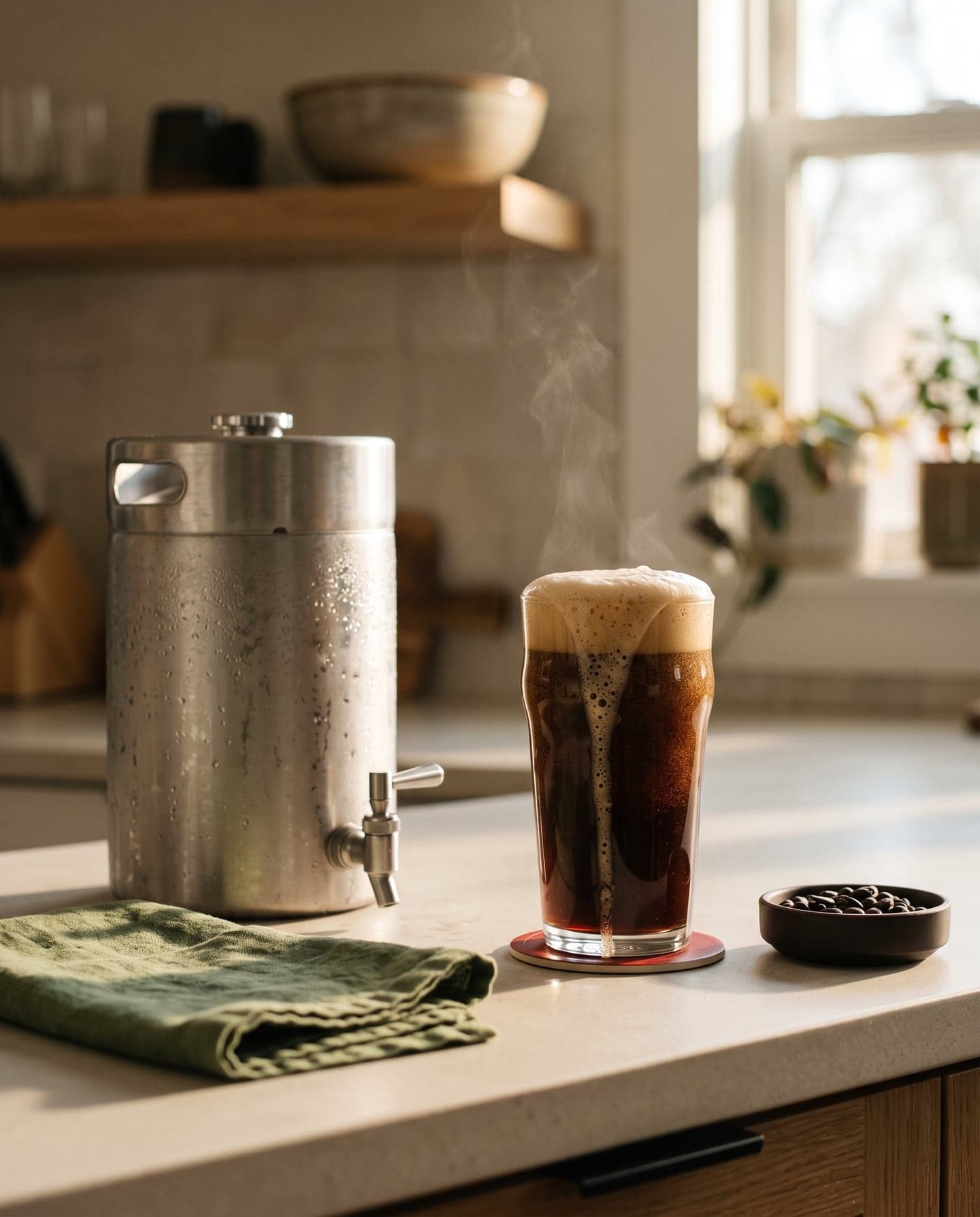
Concentrate is easy to make yourself. Stir one part coarsely ground coffee into five parts cold water by weight, let it steep 12 to 24 hours, strain it, and cut it one to one over ice. My guide to making cold brew at home has the ratios, the timing and how long each version keeps. If you'd like the creamy, foamy pour you get in coffee shops, nitro cold brew explains how it's done. And if you'd rather have a machine do the dripping, see my cold drip coffee makers.
Reading the label
Read the mix before the price
A one-to-one bottle makes twice its size in drinks; a one-to-four bottle makes five times. The Starbucks, about $9, makes 64 oz; the Java House, about $29, makes 160. Divide the price by the number of glasses the maker gives, and the gap between them mostly disappears.
Check the caffeine per glass
It runs from 0 to 2 mg per ounce (Explorer's decaf) to about 235 mg in a 12 oz Starbucks glass. The FDA cites 400 mg a day as an amount not generally linked to negative effects for most adults, so one glass of a strong concentrate can count as two coffees.
Buy the size you'll finish
An open Wandering Bear carton lasts seven days, a Starbucks bottle 14, Jot two to three weeks and Javvy ten weeks. At one glass a day, Wandering Bear's 21 small glasses would take three weeks, long past its seven days, while a Starbucks bottle is gone in five.
Water or milk decides the roast
Drunk black, a lighter blend like Starbucks or Java House is easy going. With milk, a darker or stronger one keeps its taste: Jot, Chameleon's espresso roast, or Wandering Bear.
Stumptown describes it as bright and juicy, double strength, around five 10 oz cups per bottle. It's out of stock on Amazon, and Stumptown says it doesn't sell it online.
La Colombe Cold Brew Concentrate
One part to three of water (3 oz for a 12 oz glass) and 230 mg per serving, according to La Colombe. But it's sold only on La Colombe's site, at about $28 for 12 fl oz, four servings. On Amazon you'll find La Colombe's ready-to-drink cold brew, not the concentrate.
Grady's New Orleans-style coffee with chicory is well known as a concentrate, but on Amazon it sells as pouches you steep yourself, not as a bottle. If you like the idea of making your own, they're an easy start.
Cometeer
Frozen pods of coffee extract from several roasters, which you thaw and dilute. It's sold on Cometeer's own site and needs freezer space; it isn't on Amazon.
How I picked
A real concentrate, to be dilutedSold on AmazonMix ratio published by the makerServings per bottle, for a price per glassCaffeine per serving when publishedHow long it keeps once open
I looked at sixteen concentrates, including some that turned out to be ready-to-drink or not sold on Amazon. For the seven here, I read each maker's page for the mix, the number of servings, the caffeine and how long it keeps, then divided the Amazon price on September 28, 2026 by the servings to get the price per glass. For taste, I read the concentrate rankings from NBC Select, Taste of Home, PureWow and Tasting Table, along with reviews on Java House's and Explorer's own sites and a few longer write-ups by people who drank them.
Save it for laterPin this guide and find it again when you are ready to buy.Save to Pinterest
Common questions
What's the difference between cold brew concentrate and iced coffee?+−
Iced coffee is coffee brewed hot and poured over ice. Cold brew is steeped in cold water for hours, which leaves more of the bitterness behind and gives a smoother, rounder cup. A concentrate is cold brew made with much more coffee, so you add water or milk before drinking it.
Can you drink cold brew concentrate straight?+−
You can, but it's made to be cut, and the caffeine adds up fast: 6 oz of Starbucks concentrate is already about 235 mg. Start at the maker's ratio and adjust from there.
Is cold brew concentrate stronger than regular coffee?+−
Before you dilute it, much stronger. After, it depends on the bottle: a glass of Starbucks as directed has about 235 mg, a Java House glass 135 mg, a Javvy cup 60 to 80 mg. The label's caffeine per serving and the serving size tell you more than the word concentrate.
How long does cold brew concentrate last once opened?+−
As long as its maker says, in the fridge: 7 days for Wandering Bear, 14 for Starbucks, two to three weeks for Jot, ten weeks for Javvy. Homemade concentrate keeps from five days to two weeks depending on the recipe; my cold brew guide lists them.
Can you heat cold brew concentrate?+−
Yes. Most of these are sold for hot or iced use. Chameleon, for instance, mixes 3 oz of concentrate with 3 oz of hot water or steamed milk for a hot cup, and Jot and Javvy stir into hot water the same way they do into cold.
The verdict
Wandering Bear is the cold brew to keep in the pantry
Wandering Bear is real cold brew, organic and strong, with 150 mg in a small glass, and a sealed carton waits in the cupboard until you need it. Just plan to finish it within a week of opening. For one iced latte at a time, a tablespoon of Jot does the job and the bottle keeps for weeks; and if price comes first, the Starbucks Signature Black is about $9 for 64 ounces.