Percolator vs Drip Coffee: Which One Should You Get?
A drip machine runs water through the grounds once. A percolator keeps sending it back through. Here's what that does to your cup, and which pot to buy.
I earn a commission when you buy through my links, at no extra cost to you. How that worksAmazon prices as of Nov 12, 10:18 AM ET, subject to change. Details
Drip is the better choice for most kitchens. You get a clean, balanced pot in a few minutes, and you can walk away while it brews. Get a percolator if you love hot, strong, old-fashioned coffee, or if you need a pot that works over a campfire.
For drip, I'd get the Moccamaster if it's going to run every morning for years, or the Ninja at about $70. For a percolator, I'd get the Presto, about $75.
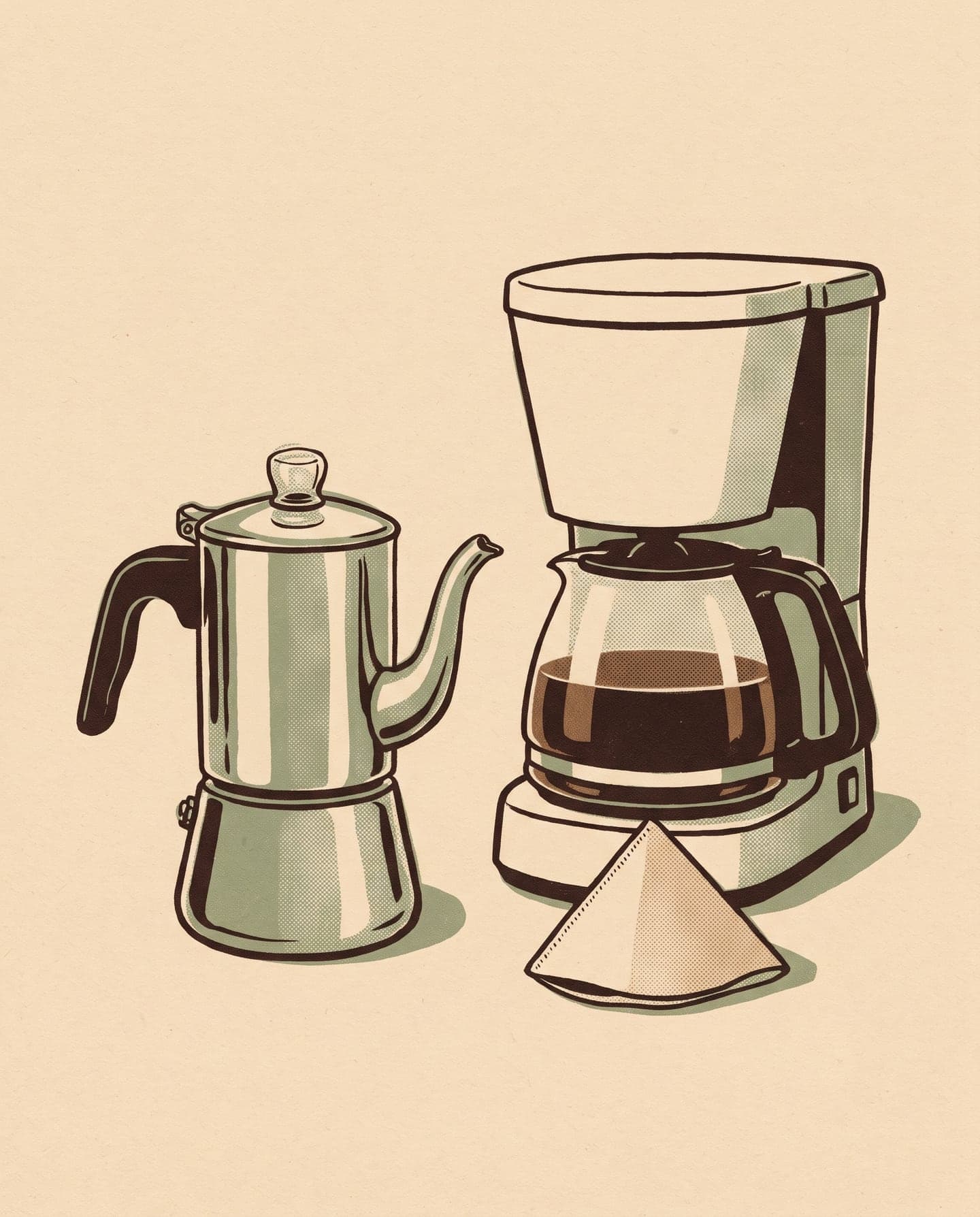
The difference is how many times the water meets the coffee. A drip machine sends hot water through the grounds once, then through a paper filter and into the carafe. A percolator pumps the brew up a tube and rains it over the grounds again and again until you stop it. That's why percolator coffee comes out bolder, and also why it turns bitter so easily.
Percolator vs drip coffee at a glance
| Drip machine | Percolator | |
|---|---|---|
| The cup | Clean and balanced | Strong and heavy, with a bite |
| Passes through the grounds | Once | Many times |
| Filter | Usually paper | Metal basket |
| Grind | Medium | Coarse |
| Water | 195 to 205°F on a good machine | At or near boiling |
| A full pot | 4 to 6 minutes on a good machine | About 12 minutes on a 60 oz plug-in |
| Your job | Press a button | Plug-in: wait. Stovetop: watch the heat |
| Price | From about $30 | From about $37 |
Percolated coffee vs drip coffee: how they taste
Drip coffee is the milder of the two. The water passes through once, so it picks up the sweet, pleasant flavors first and leaves before the harsh ones come out. You can taste the beans: a medium roast from Colombia keeps its caramel and nuts. Paper also holds back the oils, so the cup feels light and clean.
Percolated coffee is the kind a lot of people remember from a grandparent's kitchen or a campsite: strong, full and very hot. A metal basket lets the oils through, so they end up in your cup and make the coffee feel heavier in your mouth. Keep cycling it, though, and bitterness takes over, because coffee that's already brewed keeps running back through grounds with little left to give but the harsh stuff. Near-boiling water makes that worse. It also flattens the delicate side of a coffee, so I wouldn't spend money on a fruity light roast for a percolator. A dark or medium-dark roast holds up better, and it takes milk well.
If you grew up on percolator coffee and drip tastes thin to you, you aren't imagining it. You're missing the body. A stronger drip ratio gets you partway there, but it won't be the same pot.
Coffee percolator vs drip coffee maker: how each one works
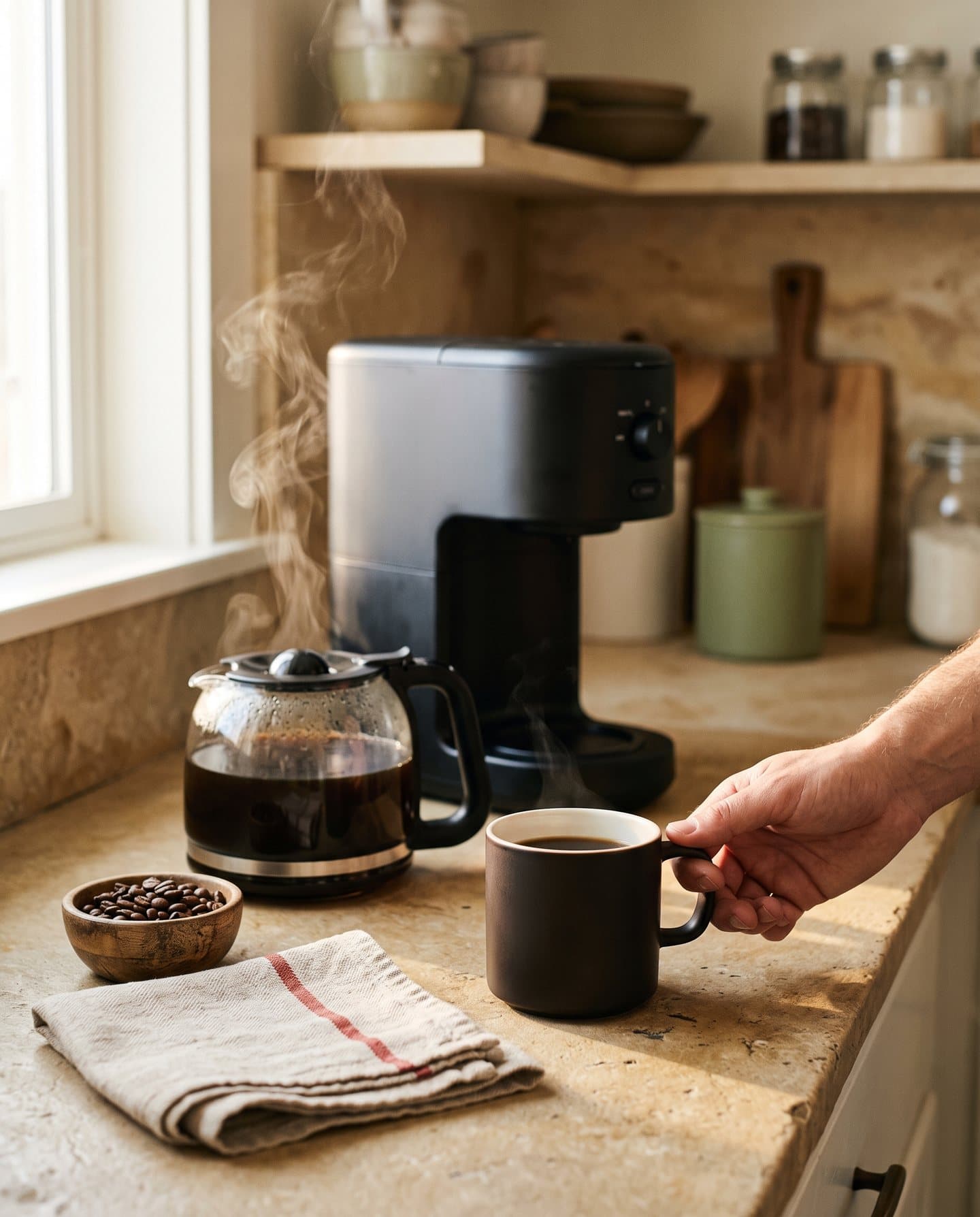
A drip machine heats water from its tank and showers it over a basket of grounds. The coffee runs through a paper filter into the carafe, and the machine shuts itself off or holds the pot warm. Some will start on a timer before you get up.
A percolator has a tube standing in the pot with a basket of grounds at the top. Heat at the bottom pushes water up the tube, it spills over the grounds, drains back down and goes around again. On a stovetop pot you can watch the color darken in the glass knob. A plug-in model runs by itself and tells you with a light when it's done.
The extra minutes on a percolator aren't all waiting. On a stove, you have to turn the heat down once it starts perking and keep an eye on the clock. One Coletti owner times it at about 17 minutes from start to finish. Walk away, and you may come back to a bitter pot.
Percolator vs filter coffee
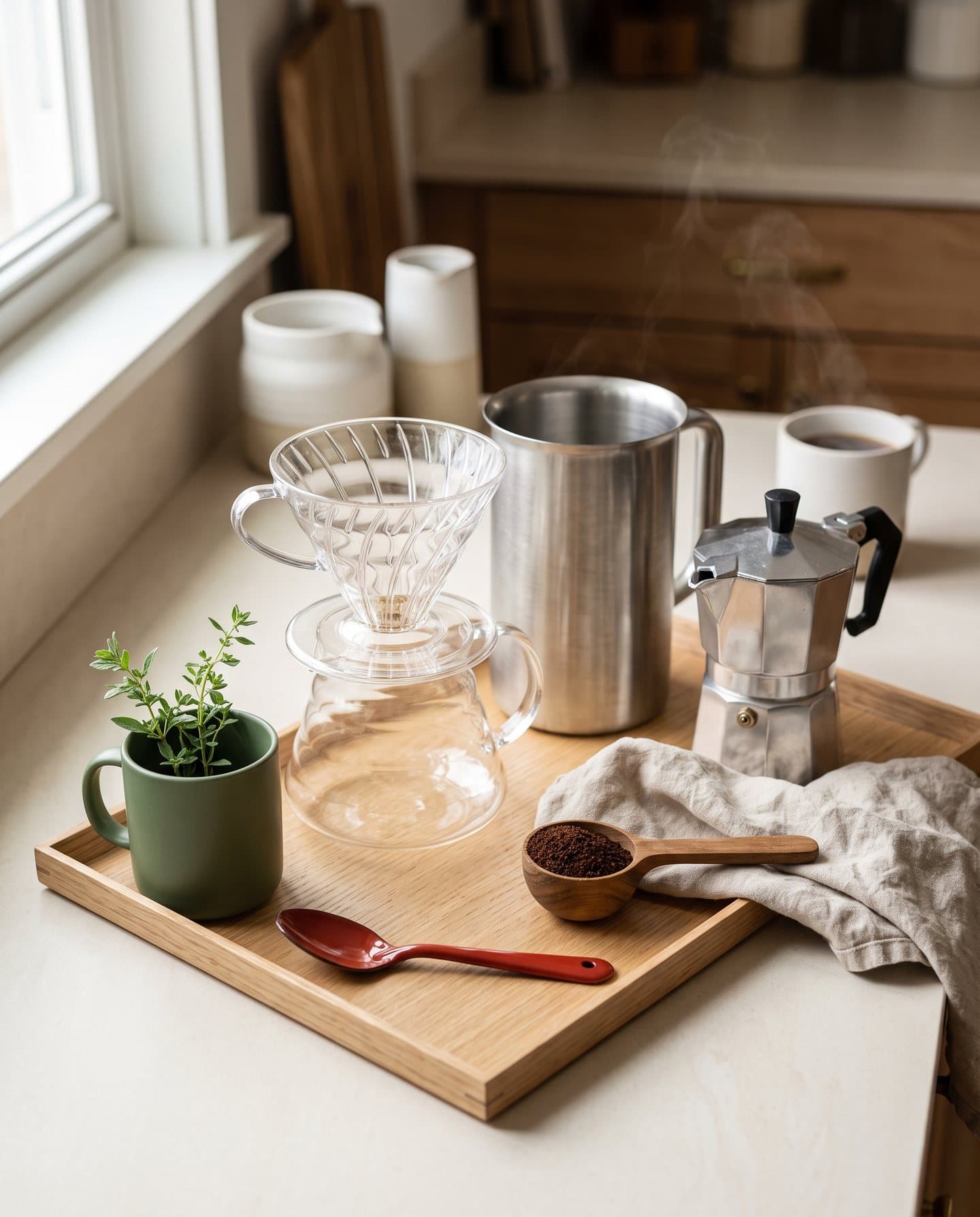
"Filter coffee" means coffee brewed through a filter once, which covers drip machines and pour-over. A percolator does have a filter of sorts, the metal basket, but its coffee doesn't behave like filter coffee. It has more oil, more body and often a bit of fine sediment at the bottom of the mug.
If you want filter coffee at its cleanest, by hand and one mug at a time, my pour over vs French press guide goes through it. For how percolators and drip stack up against the other ways of brewing, here's the best way to make coffee.
Is percolator coffee worse for your cholesterol?
Yes, compared with paper-filtered drip, though it matters mostly if you already watch your LDL or drink a lot. Coffee contains an oil called cafestol that raises LDL, the "bad" cholesterol, and paper is good at keeping it out of your mug. A metal basket isn't.
A 2025 Swedish study measured it across brewing methods. Paper-filtered drip came in at about 12 mg per liter, boiled coffee at about 940, and percolator coffee landed about level with French press, well above drip. The study measured the coffee rather than the people drinking it, and its authors say a trial would be needed to pin down the effect on LDL. Their advice for people who drink a lot of coffee every day is still simple: choose drip or another well-filtered coffee.
If your cholesterol is fine and you enjoy a mug or two from a percolator, I wouldn't lose sleep. If your doctor has brought it up, or you get through a big pot every morning, drip is the easy switch.
Does a percolator make stronger coffee than drip?
It tastes stronger, but don't buy one for the caffeine. Breville gives about 150 mg in a 12-ounce mug for both, and that's a rough figure. What really moves the number is how much coffee you use. Add a couple more tablespoons to either pot and you'll feel it more than you would from changing machines.
Percolator vs coffee maker: which is easier?
The drip machine, easily. You fill the tank, add a filter and grounds, and press a button. A good one gets the temperature right without you. The one thing to watch is the hot plate: coffee sitting on it keeps cooking, so drink the pot soon or pour it into a thermos. Both drip machines I suggest below use one.
A plug-in percolator comes close. You fill it, plug it in and wait for the light. It takes longer, and the basket and tube need rinsing, but there's no paper to buy. A stovetop percolator is the one that asks for your attention. In return it needs no outlet, no electronics and very little counter space, so it's the one to pack for a cabin or a campsite.

This is the drip machine I'd buy if it's going to run every morning for years. It's about $369, and it comes with five years of warranty and repairs for life. If that's more than you want to spend, the Ninja is about $70 and has a Rich setting for anyone coming over from a percolator. The rest are in my best coffee makers guide.

If you want percolator coffee without standing at the stove, this is the one I'd get. It's about $75, makes 2 to 12 small cups of 5 ounces each, and a light comes on when it's ready. It's also in my plastic-free coffee maker guide, because the water stays in stainless steel.
How to make drip coffee
- Use a paper filter and medium-ground coffee.
- Measure about 1 part coffee to 16 parts water. For a 40-ounce pot, that's about 74 g, or roughly 14 level tablespoons.
- Start the machine and leave it alone.
- Pour it soon after it finishes, or move it to a thermal carafe.
If you buy pre-ground coffee, it's usually ground for this. If you grind your own, my grind size chart shows the setting.
How to make percolator coffee
The amounts here come from the Presto manual and from Coletti, and you can adjust them to taste. Remember that a percolator "cup" is about 5 ounces, not a full mug.
- Fill the pot with cold water to the level you want.
- Add coarse coffee to the basket, about 1 tablespoon per cup. Presto's manual runs from 4 to 5 tablespoons for 4 cups up to 8 to 12 for a full 12. That's a lighter dose than the drip ratio above, so for a truly strong pot, go to the top of the range or a little past it.
- Put the tube, basket and lid in place, and make sure the lid is on firmly.
- Heat it. A plug-in runs on its own. On a stove, once it starts perking, turn the heat down to medium-low so it perks gently, and give it 4 to 7 minutes.
- Pour it right away. Lift out the basket first if the pot will sit, so the wet grounds don't drip into your coffee.
Too bitter next time? On a stove, shorten the perk or lower the heat. On a plug-in you can't change either, so use a coarser grind or a little less coffee. Too weak? Add more coffee rather than perking for longer.
So, which one?
- Get a drip machine if you want a clean cup, like tasting the beans, make coffee half asleep, or have been told to watch your cholesterol.
- Get a percolator if you like your coffee very hot and very strong, make big pots for a crowd, or want a stovetop pot for about $37 that also works on a campfire.
What you need
- Technivorm Moccamaster KBGV Select a drip machine to run every morning for years, about $369.$369.00
- Ninja Fresh Brew CE251 a 12-cup drip machine for much less, about $70.$89.99
- Presto 02811 Percolator a plug-in percolator with no stove to watch, about $75.$73.19
- Coletti Bozeman Percolator a stovetop percolator for gas, electric or a campfire, about $37.$36.93
Common questions
Is a percolator better than a regular coffee pot?
Not for most people. A regular drip pot is easier and more consistent, and it makes a cleaner cup. A percolator is better if you prefer stronger, hotter coffee, or if you need to brew without an outlet.
Can you use regular ground coffee in a percolator?
Yes. Presto's manual allows regular or percolator grind. Fine grounds can slip through the basket, though, so coarser is better. If you get sediment, go coarser or add a percolator filter disc.
Can you use a paper filter in a percolator?
Yes, as long as it's a disc made for percolators, which sits in the basket. Presto suggests one to cut down on sediment. Don't count on it to turn a percolator into paper-filtered drip, because the paper sits in the basket and the brew keeps cycling, which isn't how a drip filter works.
Why did people stop using percolators?
Automatic drip machines took over American kitchens in the 1970s. They were easier, more consistent and didn't need watching, and paper filters made a cleaner cup. Percolators never disappeared, and plenty of people still prefer them.