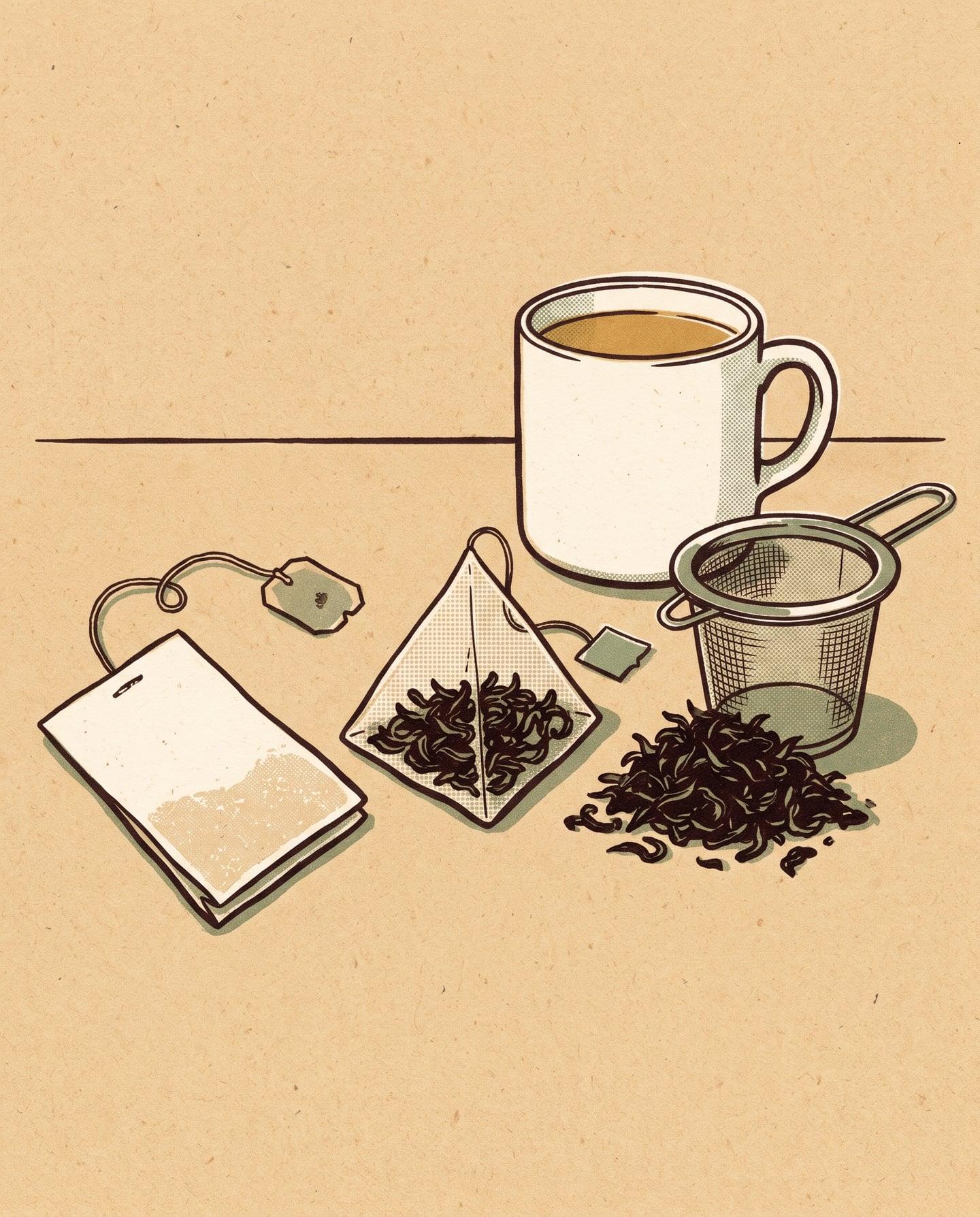
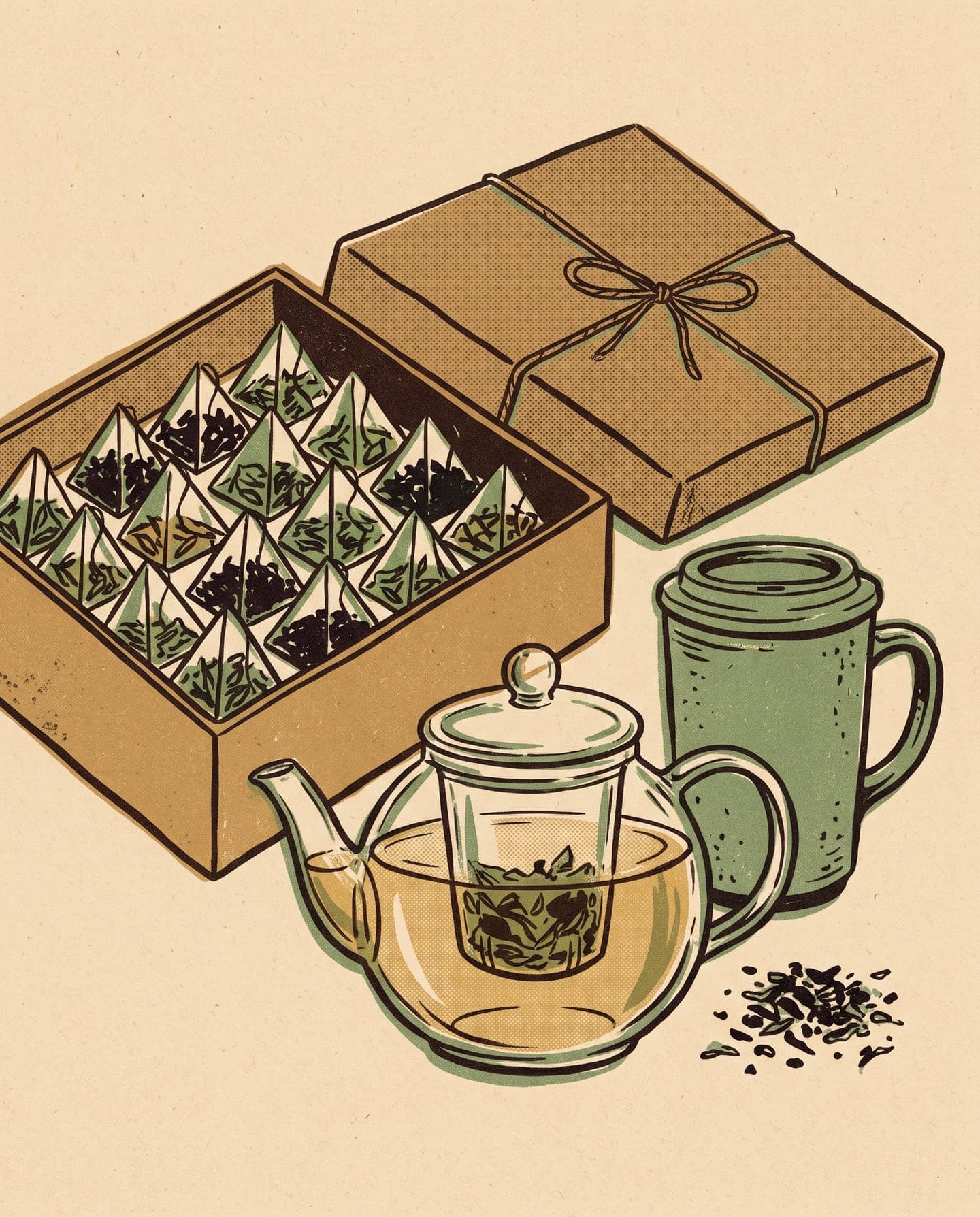
Jasmine vs Oolong Tea: What's the Difference?
One is a kind of tea, the other is a flower scent added to tea, usually green. Here's how they taste, which one has more caffeine, how to brew each, and the cup that's both.
I earn a commission when you buy through my links, at no extra cost to you. How that worksAmazon prices as of Nov 12, 1:17 AM ET, subject to change. Details
Oolong is a type of tea: leaves from the same plant as green and black tea, left to oxidize partway, so it lands between the two. Jasmine tea isn't a type at all. It's a scent: tea, usually green, packed with fresh jasmine flowers until it smells like them. So it's a flowery green tea against a tea that tastes of its own leaf.
If you want flowers in the cup, start with Numi Jasmine, about $6 for 18 bags. If you want something rounder that you can steep again and again, Twinings Oolong is the easy way in, about $10 for 40 bags.
Jasmine vs oolong at a glance
| Jasmine tea | Oolong tea | |
|---|---|---|
| What it is | a scent added to a tea | a type of tea |
| The leaf | usually green, sometimes white, oolong or black | partly oxidized, 8 to 85 percent |
| Tastes like | jasmine flowers over a light, grassy tea | honey and fruit, orchid, or toasted and woody |
| Caffeine, 8 oz | about 28 mg on green tea | about 38 mg |
| Water | 175°F (80°C) | 180 to 212°F (82 to 100°C), by style |
| Steep | 2 to 3 min | 3 to 5 min in a mug |
| Steeps from the same leaf | two, the scent fades | three to five |
The caffeine numbers are USDA averages for brewed green and oolong tea. The base under the jasmine sets its caffeine, not the flowers, so a jasmine made on black tea has more.
What oolong tea is
Every true tea starts as the same leaf, Camellia sinensis. Green tea is heated soon after picking to stop it changing color. Black tea is left to oxidize all the way. Oolong is stopped somewhere between, and where it stops is why two oolongs can be so far apart.
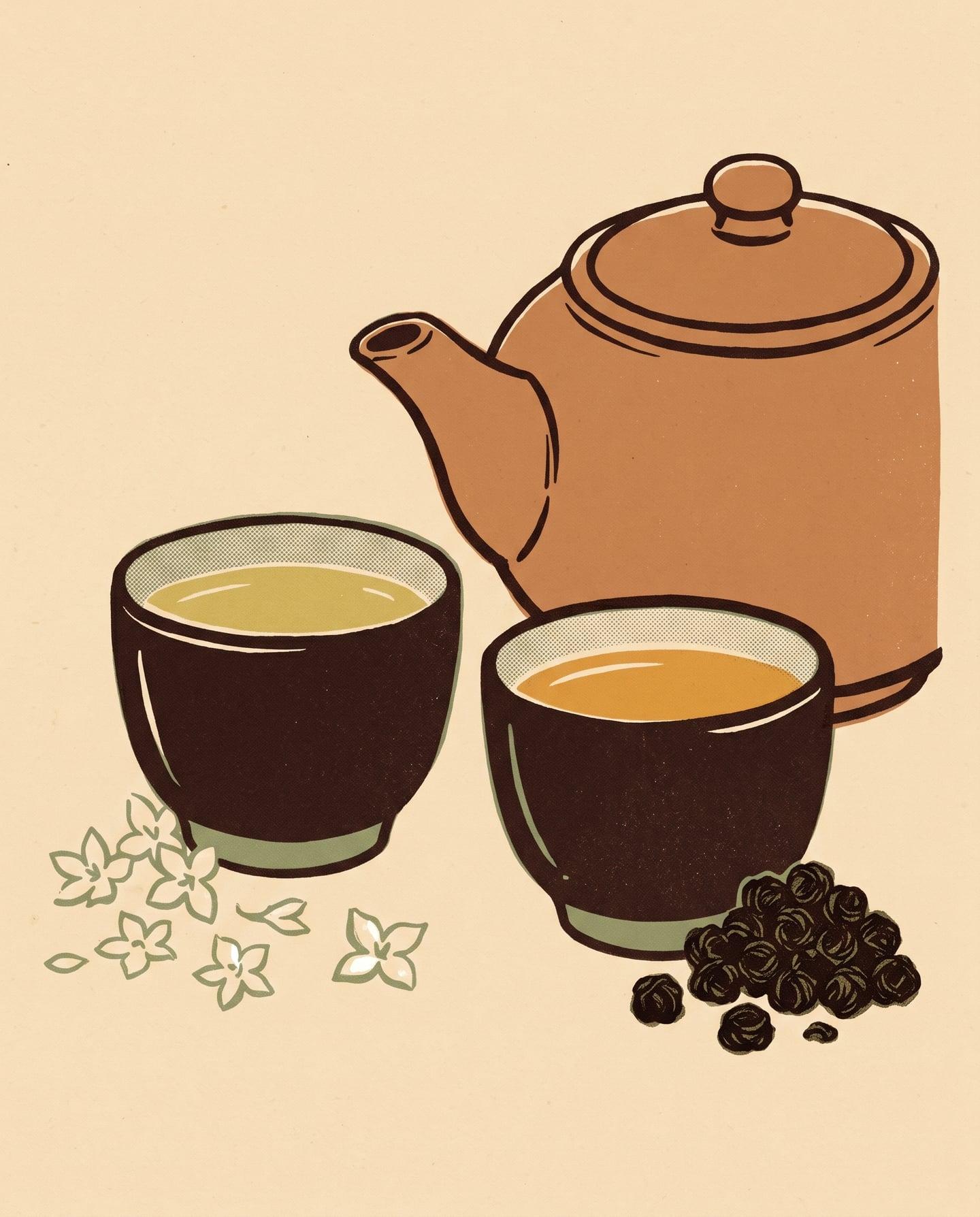
Lightly oxidized oolongs, like Tieguanyin from Anxi County in Fujian, are rolled into small tight balls and brew pale gold, floral and creamy, closer to green tea. Heavily oxidized and roasted ones, like Da Hong Pao from the Wuyi Mountains, are long dark twists that brew amber and taste toasty and woody, closer to black tea. Taiwan makes both kinds too. The name itself means "black dragon," probably from the look of the dark, curly leaves.
In a plain oolong, the taste comes from the leaf; nothing is added. For how it stacks up against plain green tea, see oolong vs green tea.
What jasmine tea is
Jasmine tea is tea scented by mixing it with fresh jasmine flowers, several nights in a row. Most of it is green tea, and most of the good stuff comes from Fujian, the same province as Tieguanyin and Da Hong Pao.
The making takes most of a year. The tea is picked in spring, around April and May, and stored until the jasmine blooms in July through September. The buds are picked around midday while they're still shut, kept warm, and mixed into the tea at night, when they open and give off their scent. The pile sits for several hours, the spent flowers are sifted out, fresh ones go in, and that repeats for days. Harney & Sons says a top jasmine like Yin Hao can be scented eight or nine times over close to a month, which is why the new year's jasmine doesn't reach stores until October or November. Fuzhou's version of the craft is on China's national list of intangible cultural heritage.
At the end, the flowers are mostly blown out of the tea. The few petals you find in a box are there for looks; the scent is already in the leaf.
One thing to check on the box: cheaper jasmine teas are sprayed with jasmine flavoring instead. "Scented with jasmine flowers" or "real jasmine flowers" is what you want to read.
How they taste
Jasmine leads with the smell. You get the flowers before the cup reaches your mouth, sweet and heady, and under them a light green tea, a little grassy. Most people drink it plain, so nothing gets between them and the flowers.
Oolong depends on which one you buy. A light, rolled oolong smells of orchids and tastes sweet and creamy. A dark, roasted one is thicker, woody and toasty, sometimes with honey in it. A grocery-store oolong bag, like Twinings Oolong, sits in the middle: warm and toasty, mellow enough to take a splash of milk if you like.
Both can taste floral, which is where people mix them up. Jasmine's floral taste comes from real flowers; a light oolong's comes from the leaf and how it was made.
Which has more caffeine, jasmine or oolong?
Usually oolong, by a little. The USDA puts brewed oolong at about 38 mg in an 8 oz mug and brewed green tea at about 28 mg, and since most jasmine is green tea, that's roughly the jasmine figure too. Black tea comes in around 47 mg, and a mug of drip coffee about twice that.
Don't lean on the gap too hard. A 2008 lab study of 20 grocery teas measured between 14 and 61 mg a serving, and the gap came more from the steeping clock than from the kind of tea. A jasmine left five minutes can catch up with an oolong pulled at three. If caffeine is the whole question, a shorter steep does more than switching teas. The same goes for chai; whether chai has caffeine compares it with coffee.
How to brew jasmine tea and oolong
Jasmine on green tea wants water well off the boil, around 175°F (80°C). Harney says three minutes at 175°F for its Dragon Pearl; a regular jasmine green bag is happy at two to three. Go hotter or longer and the green tea under the flowers turns bitter. A second steep works, though the jasmine is fainter each time.
Oolong takes hotter water, and the darker the tea, the hotter. Harney gives 180 to 212°F (82 to 100°C) depending on the oolong, the low end for a light rolled one, close to boiling for a dark roasted one. Twinings says boiling water for three to five minutes for its bags. Loose oolong is where it gets fun: the rolled balls open slowly, so the same pinch of leaves gives three to five good cups, each a little different. Give each round a little longer than the last.

The jasmine I'd start with. Numi layers its green tea with fresh blossoms three times, with no flavoring added, and it's the floral pick on the best green tea. Pull the bag on time: the green tea under the jasmine turns bitter if it steeps too long.
Can you have both? Jasmine oolong
Yes. Jasmine is a scent, so it can go on any tea, oolong included. Jasmine oolong is often a light, rolled oolong like Tieguanyin, scented the same way as the green tea. It drinks rounder and creamier than jasmine green, with the flowers on top, and the leaves give more than one good cup. The line between the two is thinner than it looks: Harney says the best jasmine teas start from a leaf that's been allowed to oxidize a little, called pouchong, a very lightly oxidized oolong, close to green tea.
Read the label, though. Some "jasmine oolong" bags are just jasmine green tea mixed with oolong in the same bag, not oolong leaves that met the flowers.
Jasmine or oolong: which should you buy?
Jasmine is the fragrant, gentle afternoon cup, easy to like if you already drink green tea. Oolong is the one that tastes of the leaf itself, from flowery to toasty, and keeps going for several cups. The surest way to know which is yours is to brew them side by side, and four boxes cover it:
Four boxes to taste the difference
- Numi Organic Jasmine Green Tea jasmine green tea in a bag, scented with real flowers, the one to start with$5.89
- Harney & Sons Dragon Pearl Jasmine jasmine pearls rolled by hand, if you want to watch them open in the mug$15.15
- Twinings Pure Oolong a mellow, toasty oolong in a bag, to see if you like oolong at all$9.99
- iTeaworld Tieguanyin Oolong loose Tieguanyin, the light, orchid-scented oolong, for several steeps from one pinch$19.99
Brew the Numi and the Twinings first, each at its own temperature, and taste them one after the other.
Common questions
Is jasmine tea a type of oolong?
No. Jasmine tea is any tea scented with jasmine flowers, and most of it is green tea. Oolong is a type of tea in its own right. The two meet only in jasmine oolong, which is oolong scented with jasmine.
Is jasmine tea green tea?
Most of the time, yes: green tea scented with jasmine blossoms. White, oolong and black jasmine teas exist too, and the box will say which base it uses. The base decides the caffeine and the brewing temperature. The best green tea covers the plain version.
Which is better before bed, jasmine or oolong?
Neither is caffeine-free. Jasmine on green tea usually has a little less, about 28 mg a mug against 38 for oolong by the USDA's averages, and a short steep cuts both. If you want none at all, an herbal tea like rooibos is the swap.
Can you add milk to jasmine or oolong tea?
Jasmine is usually drunk plain, since milk covers the flowers, though jasmine milk tea has its fans. A dark, roasted oolong or a toasty bag like Twinings can take a splash, and Twinings says with or without milk. A light rolled oolong is best plain. For a tea that's made for milk, look at the types of black tea.