Types of Coffee Beans
Almost every bag you'll ever buy is arabica, robusta or a mix of the two. Here's how the four species taste, where the other two come from, and a bag to try each one.
We earn a commission when you buy through our links, at no extra cost to you. How that works
There are four types of coffee beans: arabica, robusta, liberica and excelsa. Arabica makes up about 57 percent of the world's coffee and robusta about 43 percent, according to the National Coffee Association, so nearly every bag on a grocery shelf is one of those two or a blend of both. Liberica and excelsa are rare outside Southeast Asia and parts of Africa.
If you want coffee that tastes sweet and complex, buy arabica; that's what "100% arabica" on a bag means, and it's what Hair Bender is. If you want a stronger, more bitter cup with a thick crema, look for robusta, on its own or in an Italian blend like Super Crema.
The four types of coffee beans at a glance
| Type | Share of world coffee | Tastes like | Caffeine | Where you'll find it |
|---|---|---|---|---|
| Arabica | about 57% | sweet, fruity, chocolatey, bright | the baseline | almost every specialty and grocery bag |
| Robusta | about 43% | bold, bitter, nutty, earthy | 1.5 to 2 times arabica | espresso blends, instant coffee, Vietnamese coffee |
| Liberica | a tiny fraction | smoky, woody, fruity, like jackfruit | around arabica's level | the Philippines and Malaysia |
| Excelsa | a tiny fraction | tart, fruity, dark | low, by its sellers' account | Southeast Asia, and a few US roasters |
Beyond these four, everything else you see on a bag is a variety, an origin or a roast, and that's where the lists of "12" or "20 types" come from. More on that below.
Arabica
Arabica is the coffee most people drink, and the one specialty roasters build on. It's a cross that happened on its own in the forests of Ethiopia: a 2024 genome study found it's a natural hybrid of robusta and another wild species, Coffea eugenioides, and that it's at least 610,000 years old.
It grows higher up, where it's cooler, and it's fussier than robusta. The National Coffee Association calls it more disease-prone and in need of more care, which is part of why it costs more. In return, green arabica beans carry more sugar and more oil than robusta, and they roast into the taste people mean when they say good coffee: caramel and nuts from a Brazil or Colombia, berries and flowers from Ethiopia or Kenya, chocolate from a dark roast.
Hair Bender is the bag I'd hand someone who wants to know what arabica tastes like. It's Stumptown's best-known blend, 100% arabica from Latin America, Indonesia and Africa, which Stumptown describes as citrus, dark chocolate and raisin, and it's the top pick on the best coffee beans because it works in an espresso machine and a drip pot alike.
Robusta
Robusta, the species Coffea canephora, grows lower down, in warmer places, from Central and West Africa to Southeast Asia and Brazil. It's tougher against disease and pests, and it yields more, so it's cheaper. Vietnam grows more of it than anywhere else.
In the cup, robusta is heavier and more bitter, with an earthy, nutty or dark chocolate taste and much less of arabica's fruit and acidity. It has more caffeine too: the National Coffee Association says 50 to 60 percent more, and one study of green beans from Indonesia measured 2.09 percent caffeine in robusta against 1.09 percent in arabica, close to double.
That's why it shows up in three places. Italian espresso blends add it for body and a thick, lasting crema. Instant coffee often uses it because it's cheap and strong. And Vietnamese coffee is built on it, dripped slow through a phin and stirred into sweetened condensed milk.
Robusta has a reputation as the cheap filler, and a lot of it is. A carefully grown, well-roasted robusta is a different drink, and that's what Truegrit is selling: 100% robusta from a family farm in Vietnam's Central Highlands, roasted medium in Brooklyn. Nguyen describes it as full-bodied, with hazelnut and zest, and says it has nearly twice the caffeine of its arabica coffees. It's the usual base for a Vietnamese iced coffee, brewed strong and poured over ice and condensed milk.

Arabica vs robusta
Most of the choice comes down to these two. Arabica for sweetness and complexity, especially black or as pour-over. Robusta for strength, bitterness and crema, especially under milk or in espresso.
Plenty of bags mix them. Super Crema is the textbook example: arabica and robusta from 15 countries, roasted medium for espresso. The arabica gives the sweetness, the robusta gives the body and the crema that holds up under a cappuccino's milk. If a bag doesn't say "100% arabica," it almost always has some robusta in it. I go through the rest of what changes in an espresso bag on espresso beans vs coffee beans.
Liberica
Liberica, Coffea liberica, grows on trees that reach up to 20 meters and get picked from ladders, and the beans are among the largest of any coffee, long and lopsided with a little hook at the tip. It's native to West and Central Africa, but today it's mostly grown and drunk in the Philippines and Malaysia.
It spread when coffee rust swept through Asian plantations at the end of the 1800s, liberica held on longer than arabica, and in the Philippines it became kapeng barako, the strong coffee of Batangas and Cavite. The taste is unlike the other two: smoky and woody, with a ripe-fruit aroma people often compare to jackfruit. It's one people either love or push away after a sip.
Kapeng Barako is the way to try it here: liberica grown in Batangas, dark roasted and ground, about $30 for a 500-gram bag. Brew it in a French press or a drip machine and drink it black first, to taste what it is, before you add anything to it.
Excelsa
Many guides still call excelsa a variety of liberica, the way botanists filed it in 2006, but a 2025 genetic study led by Kew Gardens made it a species of its own again, Coffea dewevrei. It's grown in Uganda, South Sudan and Guinea, and India, Vietnam and Indonesia are planting more of it.
On its own it's tart and fruity, with a dark, almost wine-like side. It's usually blended to add depth, but you can buy it straight. the Vietnam excelsa is 100% excelsa from Quang Tri, Vietnam, sold as dark cherry, cacao nib and dried plum over molasses, and its sellers say it's lower in acid and caffeine than arabica.
How rare are these two? Guides usually say liberica and excelsa make up 1 to 2 percent of the world's coffee. The Kew team says that figure dates from the late 1800s, and that the two together now probably come to under 1,000 tons a year, about 0.01 percent of coffee exports.
Species, varieties, origins and roasts
The four types above are species, different plants. Most of the other "types" in longer lists are something else:
- Varieties are kinds of arabica, the way Honeycrisp is a kind of apple. Typica, Bourbon, Caturra and Geisha are all arabica. Geisha, also spelled Gesha, was collected in the forests of Ethiopia in the 1930s, reached Panama in the 1960s, and later broke the auction record for green coffee there, at more than $20 a pound.
- Origins are where the coffee grew: Colombian, Kona, Ethiopian Yirgacheffe, Sumatra. A Kona or a Colombian is still arabica. Single-origin coffee beans are the way to taste what a place does to the same species.
- Roasts are how long the beans were cooked: light, medium, dark, espresso, French. Any species can be roasted any way.
- Peaberry is a bean shape. About 5 percent of coffee cherries grow a single round bean instead of two flat ones, and some farms sort those out and sell them apart.
So a bag of "dark roast Sumatra peaberry" is arabica, from Indonesia, roasted dark, sorted for round beans.
Which type of coffee beans should you buy?
For most coffee, arabica, and a fresh bag of whole beans matters more than anything else on the label. For espresso with milk, an arabica-robusta blend gives you the crema and the bite. For the most caffeine per cup, or to make Vietnamese coffee, robusta. Liberica and excelsa are for the curious: one bag each, to taste coffee that doesn't taste like the rest.
A bag for each type
- Stumptown Hair Bender arabica, sweet and balanced, for drip or espresso$16.99 as of 7:35 PM ET
- Lavazza Super Crema arabica and robusta, the Italian espresso blend$23.77 as of 7:35 PM ET
- Nguyen Coffee Supply Truegrit robusta on its own, for strong coffee or a Vietnamese iced coffee$19.99 as of 7:35 PM ET
- Batangas Brew Kapeng Barako liberica, the smoky kapeng barako of the Philippines$29.99 as of 7:35 PM ET
- Excelsa Coffee Vietnam Medium Roast excelsa, tart and fruity, the rarest of the four$24.00 as of 7:35 PM ET
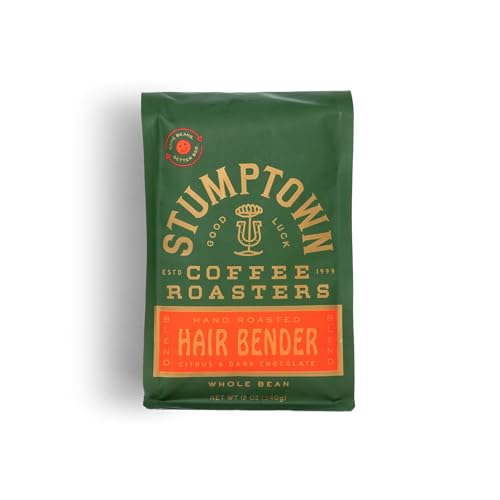
Where I'd start. Stumptown roasts it to work as espresso or drip, so one bag covers both, at about $17 for 12 ounces. Grind it fresh, and keep the rest of the bag in an airtight canister.
Common questions
What are the four types of coffee beans?
Arabica, robusta, liberica and excelsa. They're four species of coffee plant. Arabica and robusta make up nearly all the coffee in the world; liberica and excelsa are grown in small amounts, mostly in Southeast Asia and Africa.
Which type of coffee bean is best?
Arabica, for most people and most brewing: it has more fruit and sugar in the cup. Robusta wins when you want a punchier, more bitter coffee, which is why Italian espresso blends and Vietnamese coffee use it.
Is Starbucks arabica or robusta?
Arabica. Starbucks says it uses 100% arabica beans, and its bags in grocery stores say the same.
How many types of coffee beans are there?
Four species that people drink. Lists of 10, 12 or 20 types mix those species with arabica varieties like Bourbon or Geisha, with origins like Kona or Sumatra, and with roasts like French or espresso.
Which coffee bean has the most caffeine?
Robusta, with 1.5 to 2 times the caffeine of arabica. A bag sold as extra strong is usually robusta or a blend with a lot of it.