Herbal Tea Benefits
Chamomile, peppermint, ginger, hibiscus and three more: what each one is good for, how solid the evidence is, how much to drink, and when to leave it in the cupboard.
We earn a commission when you buy through our links, at no extra cost to you. How that works
Drink chamomile to sleep better, peppermint or ginger to settle your stomach, and hibiscus if your blood pressure runs a little high. Hibiscus is the only one of the four with a real trial done on brewed tea. Chamomile has good studies for sleep, though mostly with extracts, and peppermint and ginger rest on long use more than on research.
For a first box, I'd start with Traditional Medicinals chamomile, about $6 for 16 bags, and keep it by the kettle for the evening. If blood pressure is your reason, go straight to Traditional Medicinals hibiscus.
None of these is made from the tea plant. They're dried flowers, leaves and roots steeped in hot water, so none has caffeine.
Herbal tea benefits at a glance
| Tea | What it's good for | How strong the proof is | How much |
|---|---|---|---|
| Chamomile | sleep quality, a settled stomach | good for sleep, mostly with extracts; traditional use for the stomach | 3 to 4 cups a day |
| Peppermint | indigestion, gas | traditional use; the trials are on peppermint oil capsules | up to 3 cups a day |
| Ginger | nausea, bloating | studied mostly for nausea in pregnancy; little research on the tea itself | 1 to 2 cups a day |
| Hibiscus | blood pressure | a trial with brewed tea, and a review of five trials | 3 cups a day in the trial |
| Lemon balm | mild stress, sleep, gas | traditional use | 1 to 3 cups a day |
| Rooibos | an everyday cup without caffeine | no solid health claim | any time of day |
| Fennel | bloating after meals | traditional use | after meals |
The amounts come from the makers or from the European Medicines Agency (EMA), which publishes a report on each herb with the dose its traditional use is based on.
Chamomile tea: sleep and a calm stomach
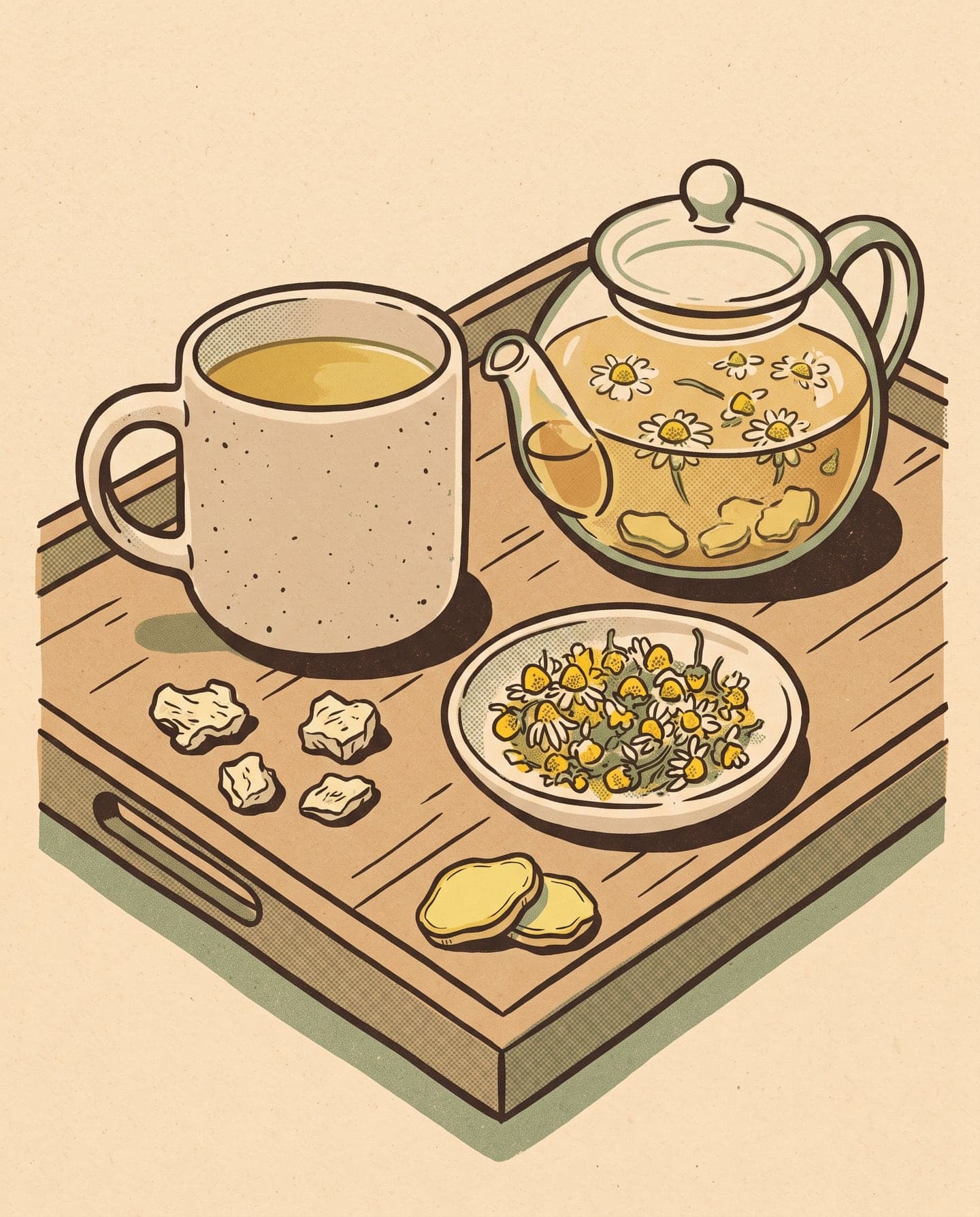
A 2019 review of 12 trials found it improved sleep quality, though it didn't show a clear effect on insomnia itself, and most of those trials used chamomile extract rather than a mug of tea. The EMA also recognizes chamomile for bloating and minor stomach cramps, at 1.5 to 4 grams of flowers in a cup of boiling water, three or four times a day.
The taste is mild, with a little honey in it. Steep it covered so the scent stays in the cup.
Skip it if you have a strong pollen allergy, especially to ragweed or daisies: chamomile is in the same plant family. It can also interact with warfarin, so check with your doctor if you take a blood thinner.

Plain chamomile flowers in a paper bag, no mint and no added flavor. It's also my first pick for tea for acid reflux, since there's no mint in it to set off heartburn.
Peppermint tea: indigestion and gas
After a big dinner, peppermint is the classic cup. The EMA accepts peppermint leaf tea for indigestion and gas, up to three cups a day. The trials you'll see quoted for irritable bowel syndrome were done with peppermint oil in capsules, not tea, and very little research has looked at the leaf.
The taste is cool and clean, and Twinings peppermint brings it down to about 15 cents a cup.
Skip it if you get heartburn: the EMA says people with reflux should avoid peppermint, because it can make heartburn worse. For a full, gassy stomach, my page on tea for bloating has six options, including ones without mint.
Ginger tea: nausea and digestion
When you feel queasy, reach for ginger. Most of the research on ginger is about nausea and vomiting in pregnancy, and Harvard points out that there's little research on ginger tea specifically. The EMA lists it for bloating and gas too, on the strength of long use.
The cup is spicy and warming, more bite than sweetness. Traditional Medicinals ginger is just ginger root, and the maker suggests a cup before or after a meal, one or two a day.
Ginger can cause heartburn or an upset stomach in some people. It may also slow blood clotting, so take care with aspirin, clopidogrel, warfarin or apixaban, and stop before surgery. If you're pregnant, ask your doctor before relying on it for morning sickness.
Hibiscus tea: blood pressure
The red one has the best evidence on this page. In a 2010 trial, 65 adults with high-normal or mildly high blood pressure drank three 8-ounce cups of brewed hibiscus tea a day for six weeks. Their systolic pressure, the top number, fell by 7.2 points, against 1.3 for the placebo drink, and the people who started highest dropped the most. A 2015 review of five trials found a similar drop, 7.6 points, and asked for bigger studies before anyone calls it settled. Harvard also cites a review where hibiscus lowered LDL cholesterol and triglycerides.
It isn't a replacement for blood pressure medicine, and it can clash with some: Harvard says to avoid it with the diuretic hydrochlorothiazide, and to drink it three to four hours apart from aspirin.

Deep red, tart and fruity. Traditional Medicinals says to steep it covered for 5 to 10 minutes and suggests 3 to 4 cups a day, which lines up with the trial. The maker also gives an iced version: brew it hot, chill it, and drink it within a day.
Lemon balm and rooibos: the calm cup and the everyday cup
Lemon balm is a mint-family herb with a soft lemon smell. The EMA recognizes it for mild stress and sleep, and for gas and bloating, at one to three cups a day. It hasn't been studied in children under 12. Traditional Medicinals lemon balm is mild and gently citrusy, a good swap for chamomile if you have a ragweed allergy.
Rooibos comes from a South African shrub. It has no caffeine and a naturally sweet, earthy taste with a vanilla note, according to Numi, and it takes a splash of milk. I won't promise it does anything for your health; I'd keep it for the afternoon, when you want something warm but not another coffee. Numi rooibos is pure rooibos, about $6 for 18 bags.
Other herbal teas and what they're used for
- Fennel is the classic tea after a heavy meal, recognized in Europe for bloating and gas. It's the top pick on tea for bloating.
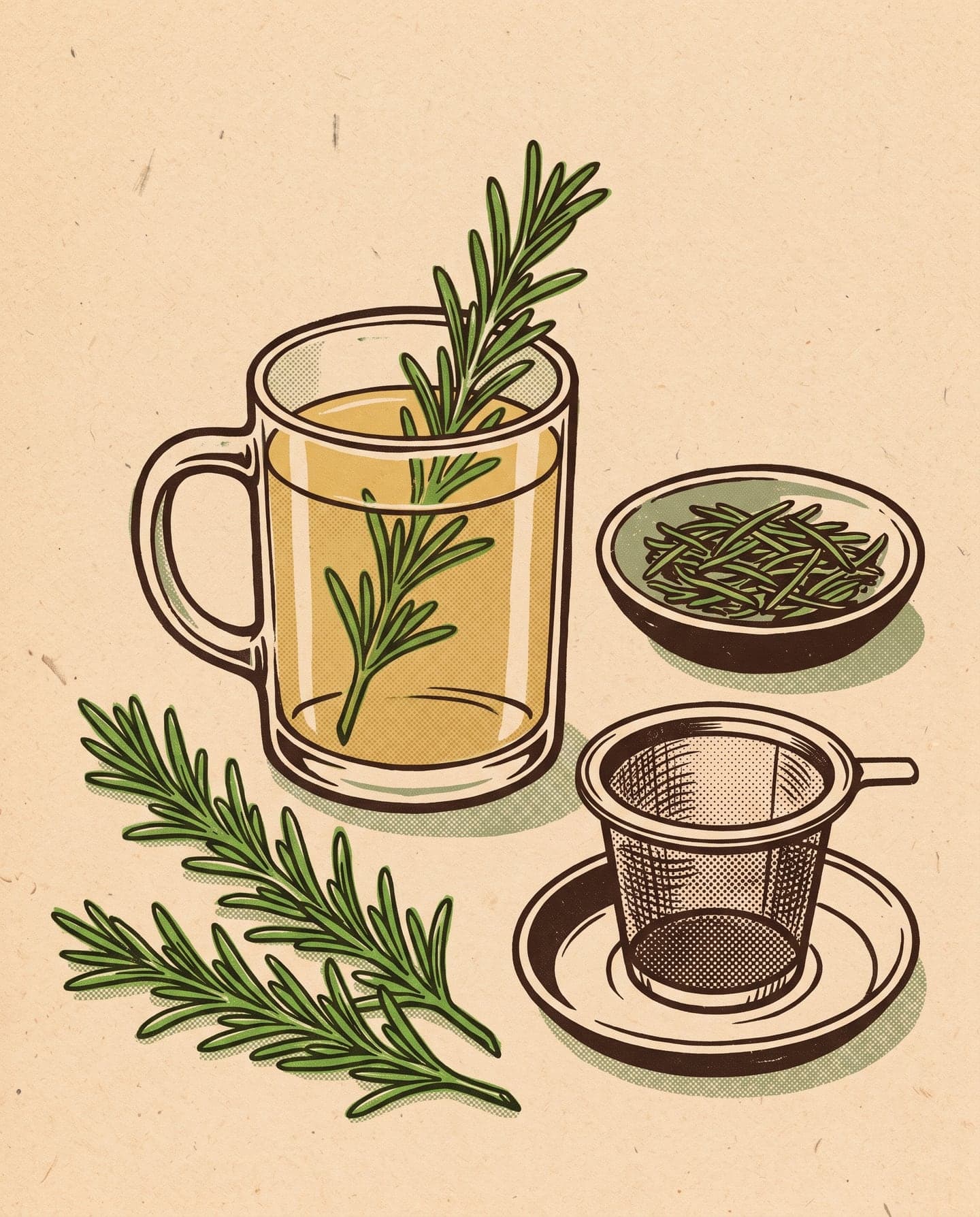
- Rosemary makes a woody, piney cup that the EMA recognizes for indigestion and mild stomach cramps. The memory claims rest on two small studies with capsules and rosemary water, and it isn't for pregnancy or gallbladder trouble. How to brew it and how much to drink are on my page about rosemary tea.
- Tulsi, or holy basil, is an Indian herb drunk for stress, with a peppery, clove-like taste. The boxes worth buying are on my page about the best tulsi tea.
- Licorice root is in many throat blends, but the National Institutes of Health warns that for people with high blood pressure, heart or kidney disease, even small amounts of its active compound have been tied to serious side effects. For the safer choices, see tea for a sore throat.
- Chai tastes like an herbal blend but is black tea underneath, so it has caffeine. How much is on does chai have caffeine.
Herbal tea side effects: who should be careful
A few herbs interact with medicines or common conditions:
- Blood thinners: chamomile, ginger and hibiscus can all interfere. Ask your doctor first.
- Blood pressure medicine: hibiscus lowers blood pressure on its own and clashes with hydrochlorothiazide; licorice raises it.
- Heartburn: skip peppermint; ginger can trigger it too.
- Ragweed or daisy allergy: skip chamomile.
- Pregnancy: ask your doctor before drinking any herbal tea every day.
Harvard adds two things for everyone: skip the versions with added sugar, and don't let a tea stand in for treatment you need.
One box for each tea
- Traditional Medicinals Chamomile for bedtime and a settled stomach$5.88 as of 11:15 AM ET
- Twinings Pure Peppermint after a big dinner, unless you get heartburn$14.59 as of 11:15 AM ET
- Traditional Medicinals Ginger when you feel queasy$5.99 as of 11:15 AM ET
- Traditional Medicinals Hibiscus three cups a day, hot or iced, if your blood pressure runs high$4.58 as of 11:15 AM ET
- Traditional Medicinals Lemon Balm a calm evening cup if chamomile isn't for you$5.88 as of 11:15 AM ET
- Numi Organic Rooibos the afternoon cup that replaces coffee$5.82 as of 11:15 AM ET
Common questions
What herbal tea has the most health benefits?
Hibiscus has the strongest evidence: in a six-week trial, three cups a day lowered the top blood pressure number by about 7 points. Chamomile comes next, for sleep quality. Peppermint and ginger are the best-known stomach teas, though their support is mostly long traditional use.
Is drinking herbal tea every day good for you?
It's fine for most healthy adults. They have no caffeine, so they don't disturb sleep, and a cup without sugar has no calories. Stay within the usual amounts (three or four cups of chamomile or hibiscus, up to three of peppermint), and check with your doctor if you're pregnant or take blood thinners or blood pressure medicine.
What herbal tea should you drink every day?
Pick for what you want from it: rooibos as an everyday cup without caffeine, chamomile at bedtime, hibiscus if your blood pressure runs a little high. Switching between two or three is easy and keeps any single herb in moderation.
What does herbal tea do to your body?
It depends on the plant. Chamomile and lemon balm are used to relax and sleep, peppermint, ginger and fennel to calm digestion, and hibiscus can bring blood pressure down a few points. Plain, none of them adds caffeine or calories.
Do herbal teas have caffeine?
No. Chamomile, peppermint, ginger, hibiscus, lemon balm and rooibos are all naturally caffeine-free. Blends can hide some, though: chai, yerba mate and anything with green or black tea in the ingredients do have caffeine.